助成金 子どもたちの教育の変革に貢献しましょう

助成金 子どもたちの教育の変革に貢献しましょう

Four clubs on four continents will help kids learn and grow in new ways. 

エリン・チャンドラー著

In August, the Kiwanis Children’s Fund awarded 22 club grants to support outstanding Kiwanis club projects on four continents. The following four projects — one from each region — show how Kiwanians can transform kids’ education. By making reading a fun event, organizing a trip that expands horizons, introducing kids to art and creativity, and providing a space for specialized learning, these projects turn students into lifelong learners. 
Dr. Seuss Reading Day
The Kiwanis Club of Carrollton, Georgia, U.S.
Each year in March, around 50 volunteers from the Kiwanis Club of Carrollton and the community visit local schools to throw a birthday party for Dr. Seuss, author of classic children’s books such as “The Cat in the Hat” and “Green Eggs and Ham.” The volunteers choose a Dr. Seuss book to read to or alongside the students, then talk with them about the importance of reading, both in school and at home with family members. With help from a Kiwanis Children’s Fund club grant, every student will then take home a copy of the book. This festive spin on story time gets kids excited about reading. 
Belgium Week for Children and Young People with Disabilities
Kiwanis Club of Innsbruck, Austria
Each year, local Kiwanis clubs take children from two special-needs schools in the Lienz district of Austria on a trip to Belgium. There is a lack of enrichment opportunities for children with disabilities in the area, and families and schools struggle to fund them on their own. A Kiwanis Children’s Fund grant helped fund this year’s trip for 18 students, who spent a week cycling, swimming, hiking, doing gymnastics and pottery, completing a high ropes course and participating in group games. The trip gives students an opportunity to develop their athletic and creative skills, but it also builds their confidence and communication skills — which help them cope with challenges, feel a sense of belonging and form friendships through shared activities.  
Art That Transforms
Kiwanis Club of Katías, Colombia
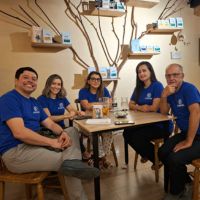
The Kiwanis Club of Katías has a history of visiting remote schools to deliver programs on nutrition, recreation, leadership and values. Now they are working with Andes Pinta, an organization that has developed art initiatives in urban areas, to bring art education to 10 rural schools without easy access to artistic and cultural programs. Art That Transforms, which has the support of the Department of Education and local teachers, will bring Kiwanis volunteers to teach a variety of painting and drawing techniques in three-month cycles and follow-up sessions over the course of two years. The club hopes that hundreds of students will develop new artistic skills — and with them, their self-expression and creativity. The program will culminate in an art exhibition in an urban center of the Andes, where communities, families and the students themselves will see their creations displayed. A Kiwanis Children’s Fund grant will help pay for art and educational supplies, transportation and costs associated with mounting the exhibition. 
Sensory Room Phase 2: Advanced Multisensory Integration
Kiwanis Club of Kuala Lumpur, Malaysia
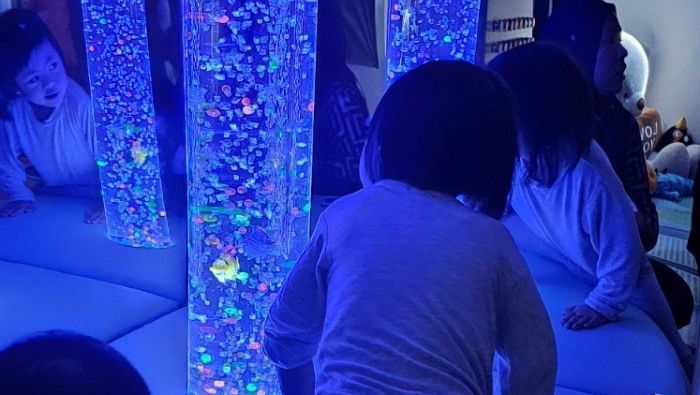
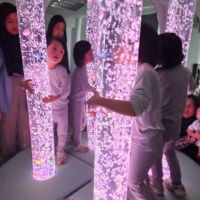
The Kiwanis Club of Kuala Lumpur is stepping up to help expand services offered by the Kiwanis Down Syndrome Foundation National Centre. Over 40% of the children who receive educational and physical therapy services at the Centre also face sensory processing challenges. The Centre’s new sensory room was built to address these needs — but it still needed specialized therapeutic tools recommended by a team of caregivers and experts who work closely with the children at the Centre. A Kiwanis Children’s Fund club grant will help purchase items that help children with visual tracking, tactile defensiveness and emotional self-regulation. With a hammock swing, sensory liquid-gel number tiles, a padded sequin wall panel, crash pad, infinity mirror, infinity tunnel and projector, 100 students will be better prepared for future school integration. 

More club grant projects
Other projects that received club grants in August include:    

  • Library renovations from the Kiwanis Clubs of Domodossola, Italy, and North Manchester, Indiana, U.S. 
  • A socio-emotional education program from the Kiwanis Club of Bucaramanga, Colombia 
  • A story time and book giveaway from the Kiwanis Club of La Palma, California, U.S. 
  • A school supply drive from the Kiwanis Club of Scottsdale, Arizona, U.S. 
  • A community garden from the Kiwanis Club of Rogers City, Michigan, U.S. 
  • The “Feed. Fuel. Teach.” nutrition initiative from the Kiwanis Club of Topsail Island Area, North Carolina, U.S. 
  • A middle school track and field event from the Kiwanis Club de Amigos, Tucson, Arizona, U.S. 
  • Meal packing events from the Kiwanis clubs of the Azaela City, Palatka, Florida, U.S., and Presque Isle, Maine, U.S. 
  • A winter clothing giveaway for local students from the Kiwanis Club of Joplin, Missouri, U.S. 
  • A food delivery and health education program from the Kiwanis Club of Acacías-Meta, Colombia 
  • Personal care and hygiene kits for students from the Kiwanis Club of Dexter-Sunrise, Maine, U.S. 
  • New or revitalized parks and playgrounds from the Kiwanis Club of Lakeshore, Sault St. Marie, Ontario, Canada; and in the U.S. from the Kiwanis Clubs of Pawleys Island, South Carolina; Redmond, Oregon; Garden City, Michigan; and Henderson Center, Eureka, California.  

How you can help
The Kiwanis Children’s Fund makes grants that improve the lives of children around the world by identifying projects that create a continuum of impact in a child’s life — one that spans their entire childhood and sets them up for a bright future. With gifts to The Kiwanis Possibility Project, the Children’s Fund ensures that its grantmaking has the greatest possible impact, supporting projects that target the Kiwanis causes — health and nutrition, education and literacy, and youth leadership development — whether through a Kiwanis club’s local service project or a club’s partner. 

Learn how your club can apply for a grant to help kids in your community. If you are interested in extending your and your club’s impact beyond your community, support The Kiwanis Possibility Project.   

子どもに読書を好きになってもらうための8つの方法

子どもに読書を好きになってもらうための8つの方法

With local partners and a few ideas, your club can support literacy.

By Destiny Cherry 

Education and literacy represent one of Kiwanis International’s three causes. Looking for ways your club can support kids’ love for reading? Here are eight ideas to do it through service, fundraising and community partnership: 

  1. Read to children at a local library, children’s hospital or school. In addition to serving kids, it’s a way to build connections with organizations in your community. Host story time at your local library, read to kids in after-school programs and during designated class times, or read to young patients in a children’s hospital. If you have multilingual club members, diversify your reading languages for kids who are multilingual or learning a new language.  
  2. Tutor at schools in your area. When you partner with schools, your club gains access to students across age groups and academic levels. While high school tutors usually require subject-specific knowledge or more advanced educational experience, elementary and lower middle-grade levels are more flexible and do not typically require college degrees. Depending on the school and the instructor’s comfort levels, tutoring can take place in a variety of settings — whether it’s during class time, after school or even as summer-school service.  
  3. Hold a book drive. Your club can host the event at a community-centered location, offering snacks and drinks during your hours of operation — and even provide Kiwanis-branded items to keep your club in people’s minds. Promote the donation of books that reflect a range of races, ethnicities, religions and languages. Distribute the books to multiple locations — or partner with a single location for the event and donate the books there at the end of the drive.  
  4. Start and fill a Little Free Library. A Kiwanis International partner, Little Free Library expands access to books through free, accessible exchange. In your community, it’s a visible testament to the club’s commitment to education and literacy.  
  5. Conduct a reading challenge on social media. Whether it’s on your club’s social media accounts or on a town/community account, a challenge could take a variety of forms. One idea: The first family to read 50 books and submit the reviews of each book as evidence are the winners. Another idea: Provide a bingo card of reading-related tasks — such as reading in a park or checking out a library book — that a family would fill out and then submit with a photo of each activity. Add book-related prizes or bookstore gift cards as incentives. 
  6. Create reading kits for kids. Here’s a way to get all club membes involved in a service project. Reading kits require only a few supplies — colored paper, markers, pencils, glue sticks and scissors — with different members contributing different supplies. One idea: A member creates a background, leaving space for a child to fill in characters and continue the story. After creating the kits, take them to a children’s hospital or to a library for story time — and complete the stories alongside the kids. Include handmade  bookmarks to add some flair. 
  7. Fundraising for e-readers. With a built-in dictionary, translators, audiobook capabilities and easy access to books, e-readers have been an increasingly useful way to help children who struggle with reading. But they’re not always available in large quantities to libraries, schools, hospitals and childcare centers. Raising money for one (or all) of these organizations can allow kids who are falling behind to bridge the gap with their peers. Don’t forget our five fundraising fundamentals!  
  8. Sponsor a “literacy corner.” Approach local businesses about putting a club-sponsored “literacy corner” in their locations. It can be as simple as a bookshelf, basket or small table with children’s books and learning games in the corner of a coffee shop, diner, barber shop/salon, laundromat or local retail store. Your club can take responsibility for accumulating the items while the business oversees the maintenance and cleanliness of the corner. Hold a fundraiser for the corner or conduct a drive for books and games. The business could also encourage customers to bring in lightly used books or games.  

More tips and ideas
There’s no better source of inspiration than real success. Check out some past success stories from the Kiwanis family. And get more tips for promoting literacy. 

CKI スポンサーシップ  キワニアン と学生双方にとってメリットがある

CKI スポンサーシップ キワニアン と学生双方にとってメリットがある

カナダに新たな「CKI 」クラブが誕生 が、 キワニアン や地域社会への支援の手をさらに増やしています。

ジュリー・セートレ著 

Deanna Fisher was in a perfect position to facilitate the launch of a new Circle K International (CKI) club. CKI is the Kiwanis Service Leadership Program for college and university students — and Fisher had been charter president of the CKI club at the University of Windsor in Ontario, Canada. She remained a member for five years — becoming governor of the Eastern Canada District along the way — while she completed both her bachelor’s and master’s degrees.

大学卒業後、フィッシャーはウィンザーの「キワニスクラブ 」に入会しました。彼女は「CKI 」への支援を続け、当初は「CKI 」の西部カナダ担当管理者(地区 )として、現在は「CKI 」の東部カナダ担当管理者(地区 )として活動しています。また、各支部(キワニスクラブ )を巡回し、「CKI 」クラブのスポンサーになることのメリットについて説明するツアーも開始しました。

オンタリオ州サーニアにある「シーウェイ・キワニスクラブ 」が、直ちに支援に乗り出した。

「[メンバーたちは]『資金も人手もある。ウィンザーが[CKI ]の生徒たちでどれほどの成功を収めたか見てきたし、私たちもそれを再現したい』と言いました」とフィッシャー氏は語る。「彼らは本当に乗り気になってくれて、こうしてチャーター校としての認可を得ることができました。」

現在、ランプトン・カレッジの「CKI 」クラブは、地区 において最も活発なクラブの一つであり、キャンパス内のさまざまなイベントの運営を支援したり、ビーチの清掃活動などの地域プロジェクトにボランティアとして参加したりしています。

しかし、会員たちはまた、支援クラブ ( )の活動にも協力しており、さまざまなホリデーイベントや、キワニスクラブ( )の「Children’s Animal Farm」でのボランティア活動など、さまざまなプロジェクトに取り組んでいます。実際、スポンサーシップ ( )の取り組みから得られた成果により、フィッシャー氏は、会員の関与を高めるためのシンプルでありながら効果的なアイデアをいくつか思いつきました。

「[CKI のメンバー]を[キワニスクラブの]会合に招待しましょう」と彼女は言う。「彼らに報告を任せて、イベントにも連れて行ってください。彼らはもう一つの力になるからです。彼らは非常に有能な人々で、喜んで協力してくれます。彼らは自分たちでプロジェクトを進めたいと思っていますが、同時にキワニスが提供するサポートや指導も求めているのです。」 

未来のキワニスを育成するメンバーシップ
フィッシャー氏自身が実証しているように、キワニスクラブ からの有意義な支援は、最終的には新たなキワニアン へとつながる可能性があります。彼女によれば、その鍵となるのは、卒業後も一貫してコミュニケーションを取り続けることだそうです。 

「それは本当に重要なことです――相手を置き去りにして、二度と話をしなくなるようなことがあってはなりません」とフィッシャーは付け加える。「なぜなら、それは築き上げている関係だからです。」

例えば、新卒者が別の都市へ引っ越す場合、キワニスクラブ は引っ越し後にオンラインでのミーティングを設定することができます。たとえその新卒者が1年間旅行をする予定であっても、連絡先を把握しておけば、12ヶ月後にクラブから連絡を取り、近況を尋ねることができます。

「『最近どう? しばらく話してなかったけど、やっぱり私たちの組織であなたに会いたいな。そのことについて、どこか話せる機会はないかな? あなたが今何をしているのか、ぜひ聞きたいな』と言ってください」とフィッシャーは提案する。

「その関係を深めれば深めるほど、学生たちがキワニスに入会する可能性は高まります。」 

詳細はこちら
国際キワニス スポンサーシップ のメリットに関する詳細はこちら。 当社のすべての言語聴覚士(SLP)や、各言語療法士のウェブサイトへのリンクをご覧いただけます。また、 こちらの動画をご覧ください をご覧いただき、クラブで「スポンサーシップ 」を始める方法と理由をご確認ください。