2026 Signature Project Contest winners

2026 Signature Project Contest winners

Out of a record 590 contest entries, this year’s six winning projects brought communities together.

By Erin Chandler

Kiwanis clubs around the world brought their communities together over the past year through creative and impactful service, fundraisers and events. The best of Kiwanis clubs’ signature projects were recognized during the 2026 Kiwanis International Convention in Manila, Philippines, when the winners of this year’s Signature Project Contest were announced. 

In the name of fun, food, competition and companionship — or a little of all four — this year’s six winning projects were selected from a record-breaking 590 contest entries from around the world. Through ongoing programs and projects built to last, these clubs promoted the Kiwanis causes — health and nutrition, education and literacy, and youth leadership development — in innovative ways. 

Want to enter next year’s Signature Project Contest? You can find contest details and a link to past winners on the contest’s webpage. 

Group One (clubs with 27 or fewer members) 

Gold 

Annual Baldwinsville Kiwanis Turkey Day Race
Kiwanis Club of Baldwinsville, New York, U.S.
New York District
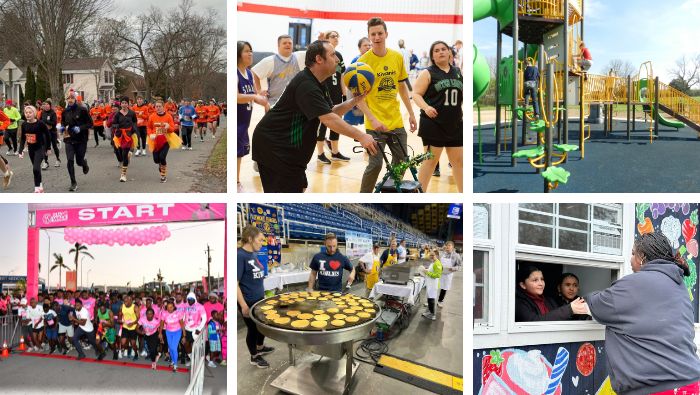
Over 57 years, the Kiwanis Club of Baldwinsville’s biggest annual fundraiser has become a beloved holiday tradition in the community. The Turkey Day Race, held on American Thanksgiving, includes a kids’ fun run, a 5K and a 10K — with an average of 1,600 runners taking part. Last year’s event welcomed 1,800 runners! Even those who are not running get involved, with the Baldwinsville Village, Sheriff’s Department, Fire Department, School District and local sponsors all providing assistance. Proceeds from the event help the club give over US$50,000 back to the community in scholarships and grants for everything from preschool to local theater, youth sports and the Ronald McDonald House. During the race, the club also hosts a food drive to support local food banks during the holiday season. And thanks to the event, 19 new members have come running to join the club.  

Silver (tie) 

Kiwanis Special Athlete Basketball Tournament
Kiwanis Club of Jenkintown, Pennsylvania, U.S.
Pennsylvania District
For 46 years, the Kiwanis Club of Jenkintown has provided athletes ages 8-70 who have intellectual and developmental disabilities an opportunity to compete in an inclusive basketball tournament with players like them from across the tricounty area. The one-day event is positive, welcoming and free of charge, with meals and snacks, Kiwanis T-shirts, medals and trophies for all athletes provided. Athletes and volunteers then participate together in service projects — building bonds among community members of all abilities. Members of Aktion Club, Key Club, Builders Club and Circle K International (all of which are Kiwanis Service Leadership Programs) serve alongside Kiwanians as athlete buddies, coaches, event volunteers and service project partners. Four hundred people attended last year’s tournament. Club members say that many participants, both athletes and volunteers, identify the Kiwanis Special Athlete Basketball Tournament as the best tournament experience they’ve had. Over the years, 80 new members have joined Kiwanis as a result.  

Kiwanis-Led Destination Play Space for ALL Ages and ALL Abilities
Kiwanis Club of Springfield South, Missouri, U.S.
Missouri-Arkansas District
The playground equipment at Fellows Lake recreational area was over 50 years old, unsafe and neglected when the Kiwanis Club of Springfield South stepped in. The club recognizes the importance of play in helping kids build social skills and learn about the world, so it was important that the playground be a place where children of all abilities could play and belong. With help from enthusiastic community partners, members transformed the space into the only fully accessible playground in Greene County — The Hatch: A Playground for ALL. Now thousands of families per year come there to picnic, hike, fish, relax and play together. Through PlayCore, it has been designated a National Demonstration Site for quality, evidence-based research in outdoor recreation. Next, the club plans to make the playground the site for an annual Kiwanis Day of Play event, where families can enjoy refreshments and activities — and get information and resources from local organizations like Abilities First.  

Group Two (clubs with 28 or more members) 

Gold 

Breast Cancer Awareness 5K Run/Walk/Wheelchair
Kiwanis Club of Providence-Montego Bay, Jamaica
Eastern Cananda and the Caribbean District
The Kiwanis Club of Providence-Montego Bay’s Breast Cancer Awareness Run/Walk/Wheelchair brings over 2,000 people from Jamaica and beyond together to “support the fighters, admire the survivors and honor the taken.” The event raises awareness about breast cancer and includes an education component. Last year, a surgeon gave a presentation on reconstructive surgery for breast cancer survivors. But it also raises over US$10,000 for screening, scans, surgery and support for people in the community experiencing or recovering from breast cancer. Additional funds go to the Jamaica Cancer Society and the Cornwall Regional Hospital’s pediatric oncology ward, for a total of US$80,000 raised. Sixty-nine Kiwanis club members and 133 Key Club and Aktion Club members participate in and volunteer at the event. The eight area Key Clubs even have a competition to see who can get the most participants to register. This year’s 5K had special significance: After it was postponed by Hurricane Melissa, the race became a celebration of resilience, raising additional funds and using partnerships to provide care packages for those affected by the devastating storm.  

Silver 
Kiwanis Club of Fargo Annual Pancake Karnival
Kiwanis Club of Fargo, North Dakota, U.S.
Minnesota-Dakotas District
Everyone in Fargo knows and loves the Kiwanis Club’s Pancake Karnival. Held annually for 67 years, it’s a tradition for generations of families — both as attendees and volunteers. Many of the Fargo Kiwanians’ reasons for joining Kiwanis involve childhood memories of the Pancake Karnival. Some attendees have never missed a single Karnival and are now bringing their children, grandchildren and great-grandchildren for a day of fun that gives back to the community. The goal of the Pancake Karnival is to raise as much as possible for grants to support children. Last year, US$25,000 helped create a Kiwanis-branded space in a city park centered on children’s mental health awareness, with US$42,750 left for local nonprofits. This year, the club plans to award US$30,000 to three organizations that address childhood food insecurity. And many of the organizations that have received grants over the years return the favor as Pancake Karnival volunteers — a full-circle Kiwanis moment!  

Bronze 
Kiwanis Caring Kitchen
Kiwanis Club of Erie, Pennsylvania, U.S.
Pennsylvania District
After an 8-year-old child in the community died from malnutrition, the Kiwanis Club of Erie vowed to make sure such a tragedy would not happen again. In collaboration with Community Shelter Services (CSS), it opened the Kiwanis Caring Kitchen, a small structure in a parking lot that offers three meals a day, seven days a week, for anyone who is hungry — no questions asked. Customers are typically children and families from the neighborhood, but some come from further away, including those experiencing homelessness. The school bus stops nearby, so every child who boards the bus has something to eat. Local Scout troops have made picnic tables for outdoor seating, and Kiwanians painted the kitchen exterior to make it bright and welcoming. CSS staff oversee the kitchen, and on-site volunteers include Kiwanis, Key Club, Aktion Club and K-Kids members. Local businesses and community members have donated money, food and supplies. The project is a true community effort, and it has paid off. In just two years, the club estimates the Kiwanis Caring Kitchen has served 90,000 people.  
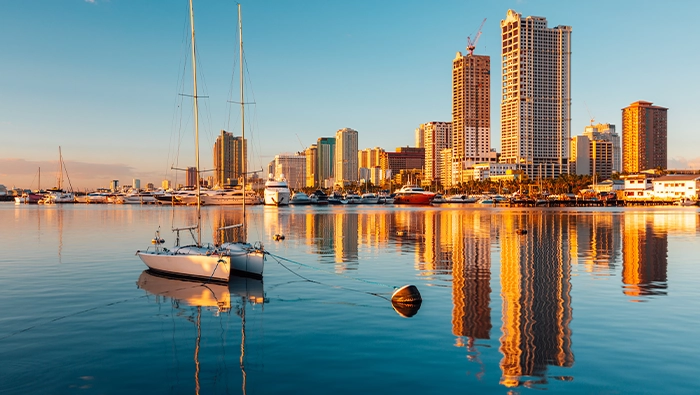
Extend your Manila adventure

Extend your Manila adventure

When the convention ends, stay a little longer and see where the city leads you.

By Lauren Young

When you come to Manila, Philippines, for the 2026 Kiwanis International Convention, you’ll find even more than the information and inspiration of our big event. You’ll find a city filled with hospitality and history — the kind that invites you to stay a little longer. 

If you extend your stay by a day or two before or after the convention, you can immerse yourself in a day full of history, art and leisure — and turn your convention trip into a deeper adventure.  

To reach Old Manila from the Manila Marriott Hotel (or any of our preferred hotels), expect a ride of around 30 minutes by rideshare or taxi. 

Culture and history 

  • Intramuros: The Walled City. Intramuros, or “within the walls,” is the historic heart of Manila, founded in 1571 as the seat of colonial government, religion and commerce under Spanish rule. Once inside the walls, you’ll find a compelling mixture of Spanish-colonial architecture, historic fortifications and tranquil courtyards. Highlights include: 
  • Fort Santiago and Rizal Shrine. One of Manila’s most important historical landmarks, Fort Santiago was built in the late 1500s as a Spanish military fortress and later held prisoners during multiple foreign occupations. 
  • San Agustín Church and Museum. Completed in 1607, this UNESCO World Heritage site is the oldest stone church in the Philippines. The interior contains a trompe-l’œil painted ceiling, Baroque pipe organ, hand-carved choir seats, religious art and more. The adjoining museum, located in a former monastery, showcases colonial-era paintings, garments and artifacts. 
  • Casa Manila Museum. Housed in a beautifully restored Spanish colonial-era house in Plaza San Luis, Casa Manila offers a look at upper-class life in the Philippines in the latter half of the 19th century. 
  • Baluarte de San Diego. At the southern edge of Intramuros, this restored bastion dates to the 1500s and once formed part of Manila’s circular defense wall. Its stone ruins and gardens make a pleasant, scenic place to rest, take photos and imagine the centuries of history the walls have witnessed. 
  • Binondo (Chinatown). Across the Pasig River from Intramuros lies Binondo, established in 1594. It is considered the world’s oldest continuously inhabited Chinatown. Visitors will find a blend of old and new — historic churches and archways alongside gold shops, noodle houses and herbal stores. 
  • Binondo Church (Minor Basilica of St. Lorenzo Ruiz). Originally built in 1596, the church stands at the heart of Binondo. Its Baroque façade and octagonal bell tower recall its Spanish and Chinese influences, honoring St. Lorenzo Ruiz, the first Filipino saint. 
  • Ongpin Street. The main artery of Chinatown, Ongpin is lined with jewelry shops, bakeries and traditional apothecaries. It’s a popular stop for dim sum, hopia (another type of pastry) and other Chinese-Filipino specialties. 
  • Binondo-Intramuros Bridge. Completed in 2022, this steel arch bridge links the historic walled city with Chinatown. Its pedestrian walkway offers views of the Pasig River and Manila’s old quarter.  

Entertainment and leisure 

  • Manila Ocean Park. Opened in 2008, Manila Ocean Park is one of the city’s most visited attractions. Located directly behind the Quirino Grandstand along Manila Bay, you’ll find over 14,000 marine creatures representing nearly 300 species, many native to Southeast Asia’s tropical waters. The highlight is the Oceanarium, a glass tunnel where guests are surrounded by sharks, stingrays and colorful schools of fish. Beyond the main aquarium, there are themed attractions and live animal shows throughout the day. Manila Ocean Park also is home to several cafés, souvenir shops and shaded viewing decks overlooking the bay.  
  • Philippine Biodome. Within the same complex as the Ocean Park, the Philippine Biodome is designed to mimic the Philippines’ tropical environments — combining natural exhibits, interactive learning and sustainable design in one lush, green space. As you stroll along its garden walkways, you’ll encounter exhibits on rainwater harvesting, solar energy and native plant species. Explore areas like the Freshwater Gallery, Crocodile Tunnel and Sun Conure Feeding Station — or take the zipline for a bird’s-eye view of the entire dome.  
  • Divisoria Market. A short ride from Binondo, Divisoria Market is Manila’s traditional wholesale and market district, known for its lively street stalls and bargain shopping. The area developed in the 19th century as a trading hub outside the walled city and remains a favorite spot for locals seeking textiles, clothing and home goods.  

Food and dining

  • Barbara’s Heritage Restaurant. Located inside the historic Plaza San Luis complex, the restaurant features Filipino-Spanish cuisine. Meals are served in an elegant, wood-paneled dining room, often accompanied by live traditional music and cultural dance performances in the evening.   
  • Sky Deck at The Bayleaf Hotel. Perched atop The Bayleaf Hotel within Intramuros, the Sky Deck View Bar offers panoramic views of the city skyline and Manila Bay. The menu combines Filipino favorites and international comfort food — from grilled seafood and crispy bagnet (crispy fried pork belly) to pizzas, pasta and salads.  
  • Ying Ying Tea House. Located on the corner of Yuchengco Street, this three-story restaurant is famous for its wide-ranging Cantonese menu and dim sum specials, including siomai, hakaw and roast meats.  
  • Wai Ying Fastfood. Popular for its Hong Kong-style dishes served in a simple, canteen-style setting, Wai Ying attracts diners for its Peking duck and reasonable prices. It’s one of Binondo’s most recommended stops.   

Manila Bay (30- 40-minute drive)

Just west of the city’s historic core, Manila Bay offers the perfect summer exploration through museums, parks, performing arts venues and more. Start at Rizal Park and slowly make your way down the bay.  

Culture and history 

  • Rizal Park (Luneta Park). Just outside Intramuros lies one of Asia’s largest urban parks — 143 acres of gardens, fountains and monuments along the shores of Manila Bay. The park is named after Dr. José Rizal, whose monument marks the site of his execution and final resting place. Visitors can stroll through themed gardens such as the Chinese and Japanese Gardens, visit the Orchidarium and Butterfly Pavilion or pause by the Central Lagoon and Martyrdom of Dr. Rizal Diorama.  
  • The National Museum Complex. Bordering Rizal Park is the National Museum Complex, the country’s premier center for art, culture and science. The complex consists of three grand neoclassical buildings: 
  • National Museum of Fine Arts. Housed in the former Legislative Building, this museum showcases masterpieces of Filipino art across 29 galleries. The highlight is Juan Luna’s painting “Spoliarium” — an 1884 work that symbolizes both artistic triumph and the Filipino struggle for dignity. Visitors also will find sculptures, portraits and modern pieces. 
  • National Museum of Anthropology. Located in the old Finance Building, this museum focuses on ethnology and archaeology. Exhibits feature precolonial tools, pottery and jewelry, as well as displays on indigenous textiles, maritime heritage and artifacts recovered from shipwrecks like the San Diego galleon. 
  • National Museum of Natural History. Housed in the former Department of Agriculture and Commerce building, the museum features a central atrium crowned by the steel-and-glass “Tree of Life.” The institution offers numerous galleries dedicated to Philippine biodiversity, with displays of preserved specimens, interactive scientific installations and information on conservation initiatives specific to the Philippines. 

Entertainment and leisure 

  • Robinsons Manila. Located in the Ermita district, Robinsons Manila is one of the city’s largest shopping centers. It includes a mix of international and local retail stores, restaurants, cinemas and services.  
  • Manila Baywalk. This seaside promenade runs for about 2 kilometers along Roxas Boulevard, toward the Cultural Center of the Philippines. It features palm-lined walkways, benches and open-air cafés, with uninterrupted views of the bay.  
  • Manila Zoo. Opened in 1959 and renovated in 2022, the zoo is a 5.5-hectare facility housing more than 1,000 animals from 90 species — along with the Botanical Garden, Butterfly Pavilion, Reptile House and a Philippine Endemic Exhibit. Wide, shaded paths make it an accessible and family-friendly attraction.  
  • Cultural Center of the Philippines (CCP). The country’s main venue for the performing arts houses multiple theaters, galleries and rehearsal halls, as well as major resident companies such as Ballet Philippines and the Philippine Philharmonic Orchestra. The CCP regularly hosts concerts, theater productions, art exhibits and national cultural festivals. The distinctive modernist design by architect Leandro Locsin is a landmark of postwar Philippine architecture.  
  • Paco Park. Built in 1820 as a cemetery for Spanish friars and Manila’s elite families, the park’s circular design includes the small St. Pancratius Chapel at its center. Now a tranquil space with landscaped gardens and walkways, the park occasionally hosts concerts and cultural events.  

Food and dining 

  • Market Café. This buffet restaurant is known for its open cooking stations and broad selection of international cuisine. Offerings include grilled meats, seafood, Japanese sushi and tempura, Chinese dim sum and Filipino dishes.  
  • Manila Bay Kitchen. Located at the Admiral Hotel, this restaurant offers Filipino and international fare in a contemporary dining setting with bay views. The menu includes seafood, pasta and local favorites. With indoor and terrace seating available, it serves as a comfortable option for lunch or dinner near the waterfront.  
  • Harbor View Restaurant. Built on a pier extending into Manila Bay, diners can enjoy the sea breeze while choosing from a menu of seafood and Filipino comfort dishes.  

Makati Central Business District (15- to 20-minute drive) 

Within the country’s main financial and lifestyle hub, you’ll find lush parks, contemporary museums and a wide range of restaurants.   

Culture and history

  • Ayala Museum. Located in the heart of Makati’s Greenbelt complex, Ayala Museum’s galleries trace 1,000 years of Filipino craftsmanship and creativity — its permanent exhibits include precolonial gold jewelry, ancient maritime trade artifacts and the Diorama Experience. The museum also hosts lectures and educational programs throughout the year.  
  • Greenbelt Chapel (Chapel of Sto. Niño de Paz). Set in the middle of the Greenbelt shopping and dining area, the Greenbelt Chapel is a circular, open-air place of worship surrounded by landscaped gardens and ponds. Built in 1983, it serves as a quiet space for reflection within Makati’s commercial district.  
  • Manila American Cemetery and Memorial. Located in nearby Bonifacio Global City (BCG), the Manila American Cemetery covers 152 acres and contains the graves of over 17,000 U.S. and Filipino soldiers who died during World War II. The site includes a central memorial with mosaic maps and walls engraved with the names of the missing. Maintained by the American Battle Monuments Commission, it is recognized as one of the best-preserved World War II memorials in the Pacific.  

Entertainment and leisure 

  • Bonifacio High Street. In Bonifacio Global City, this outdoor shopping and entertainment area is designed with pedestrians in mind. The complex includes international and local retail stores, restaurants, cinemas and landscaped gardens. Art installations and weekend markets are often held in the area. 
  • Venice Grand Canal Mall. Located in McKinley Hill, Taguig — and inspired by Venice, Italy — this shopping and dining complex features a man-made canal where visitors can take short gondola rides, as well as European-style architecture, cafés and boutiques.   

Food and dining 

  • Blackbird at the Nielson Tower. Occupying the restored site of Manila’s first airport terminal, Blackbird preserves the building’s Art Deco architecture and serves modern European and Asian-inspired cuisine. Dishes include grilled seafood, steak andpasta.  
  • The Penthouse 8747. On the rooftop of the Lepanto Building, patrons get views of the Makati skyline. The interior design draws inspiration from 1930s architecture, and the menu focuses on continental dishes, including steak, pasta and light entrees.  
  • Filling Station Bar and Café. A retro-themed diner decorated with 1950s American memorabilia, the restaurant offers a menu of American comfort food such as burgers, ribs and milkshakes — as well as Filipino classics. The restaurant is open late and is known for its colorful décor and large portions.  
  • Mercato Centrale. Filipino and international street foods are available at this open-air night market, which operates on select evenings and provides a casual, social dining environment popular with both locals and vendors.  

More to explore 

Be sure to visit a couple of Manila’s other remarkable sites:  

Malacañang Palace (20- to 30-minute drive). Located along the Pasig River in the San Miguel district, this palace has been the official residence of the Philippine president since 1863. Originally built as a private summer house in the mid-1700s, it later became the center of executive governance under Spanish, American and Filipino administrations. Access to the main palace is restricted, but visitors who plan well ahead can arrange tours of the Malacañang Museum and Library, which features state gifts, presidential memorabilia and more.  

San Sebastian Basilica (25- to 35-minute drive). Situated in the Quiapo district, San Sebastian Basilica is the only all-steel church in Asia. Completed in 1891, it was prefabricated in Belgium and assembled in Manila, combining Gothic Revival architecture with European stained glass and intricate interiors. A National Historical Landmark, the basilica remains an active parish. 

Please note: Registration for the 2026 Kiwanis International Convention is now closed.

On-site registration will not be offered.

Get to know Manila

Get to know Manila

Here are tips and recommendations for our convention’s host city.

By Lauren Young

For each Kiwanis International convention, one of the most exciting features is the availability of experiences in our host city. For 2026, we’re especially pleased to provide tips and recommendations about this year’s location: Manila, the capitol of the Philippines.  

Before we pass along some notable sites, here are a few things you might want to know before you go: 

  • Weather and wear: Plan for daily highs of around 90 degrees Fahrenheit and lows around 79 degrees. And since June is the start of the rainy season, there will be a good chance of rain throughout the week. Our recommendation: Pack lightweight, breathable clothing and a compact umbrella or a light rain jacket.     
  • Money: The Philippine peso (PHP) is the only currency accepted for everyday purchases. Major cards (e.g., VISA, Mastercard) are widely accepted at larger restaurants and hotels, but most shops and attractions require cash.  
  • Getting around: For simplicity and safety, use the Grab rideshare app for point-to-point trips. When you have extra time, try riding a jeepney — Manila’s brightly painted public minibuses that follow fixed routes around the city.

If you find a little free time
If your schedule allows, take some time to explore Manila’s culture and people — and the connections that make every Kiwanis gathering special. Even with a full convention schedule, you don’t have to go far to get a glimpse of Manila. Within reasonable distances of our hotels, you’ll find cuisine, culture and leisure that make the most of a few free hours: 

Walkable (5-15 minutes) 

  • CRU Steakhouse. The Manila Marriott’s signature steak and seafood restaurant, with an extensive wine list.  
  • Casa Buenas. Filipino-Spanish dishes with locally sourced ingredients in a heritage-inspired setting at Newport World Resorts.  
  • Café Mary Grace. Local café chain known for ensaymada (a brioche-like pastry), cheese rolls and Filipino-style pasta.  
  • S&R New York Style Pizza. Casual, large-slice pizza and comfort food.  
  • Newport Performing Arts Theater. A large venue within Newport World Resorts that hosts musicals, concerts and live entertainment.  
  • Newport Cinemas. A modern complex featuring multiple movie theaters, including premium and 4D options, showing local and international films.  
  • Shrine of St. Thérèse of the Child Jesus. A domed Catholic church known for its modern design and peaceful atmosphere.  

A short ride (15-30 minutes) 

  • Villamor Air Base Golf Club. An 18-hole championship golf course open to the public, featuring wide fairways, mature trees and a driving range.  
  • SM Mall of Asia. One of the largest shopping complexes in Asia, located along Manila Bay, featuring hundreds of retail stores, restaurants and cinemas — along with an indoor skating rink and sunset views along the outdoor promenade.  
  • The Theatre at Solaire. A theater inside Solaire Resort and Casino, designed for large-scale performances such as international musicals, orchestral concerts and other shows. 

Those are just a few of the sites to see within walking or vehicle-riding distance during the convention. Planning to stay a little longer? Check out our blog post about the ways you can turn your trip into a deeper, more personal adventure — especially if you extend your stay in Manila by a day or two, before or after the convention. 

In the meantime, visit our convention webpage to learn more about the event itself! 

Please note: Registration for the 2026 Kiwanis International Convention is now closed.

On-site registration will not be offered.