Grants support physical and emotional health
11 Circle K International projects receive Tomorrow Fund grants.
By Erin Chandler
In college and university communities around the world, members of Circle K International are making a difference through service and leadership. The Kiwanis Children’s Fund established the Tomorrow Fund to help these clubs and districts implement more creative solutions to problems and make the greatest possible positive impact.
This July, the Children’s Fund awarded 11 Tomorrow Fund grants — all to help CKI members improve the physical and emotional health of children, families and other vulnerable people in communities across the United States and in the Philippines.
Trunk or Treat for Differently Abled Children and Adults
Circle K International of Baldwin Wallace University, Ohio, U.S.
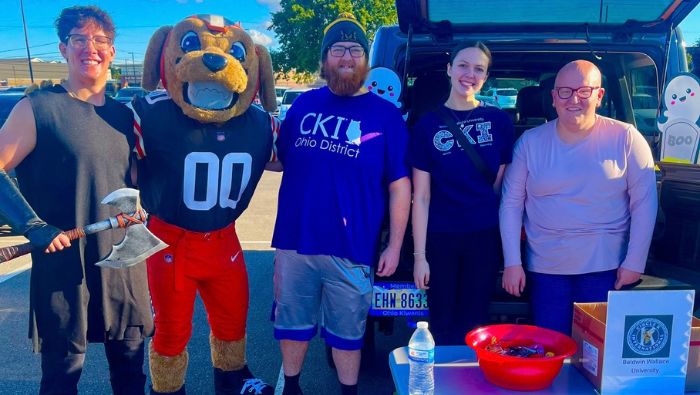
A Tomorrow Fund grant will help Baldwin Wallace University CKI purchase candy for its annual Trunk or Treat for Differently Abled Children and Adults. A safe and welcoming event, it takes place in a flat parking lot with candy stations at decorated vehicles grouped closely together — so it’s accessible to people of all abilities. Volunteers, including those from Berea Mid-Park High School Key Club, Community West Cuyahoga Aktion Club and the Kiwanis Club of Middleburg Heights, hand out treats to trick-or-treaters who have disabilities or special needs and their families — regardless of age or ability to say “trick-or-treat.” The event, which grows each year, also features food trucks, music, entertainment, crafts and resources for the disabled community. This year, the Trunk or Treat is ready to welcome 500 trick-or-treaters to dress up and have fun with families like theirs.
NICU/PICU Project
Circle K International of Bowling Green State University, Ohio, U.S.
Bowling Green State University CKI will assemble 100-150 care bags for children and families in ProMedica Toledo Hospital’s Neonatal and Pediatric Intensive Care Units. A Tomorrow Fund grant will help the club supplement donations and its own purchases to stock reusable grocery bags with diapers and wipes, stuffed animals, fidget toys, art supplies, board books and more. The club then will hold a packing event to assemble the bags. The club hopes the bags — which will go to hospitalized kids and their siblings — will take some weight off families in difficult circumstances and let them know they are not alone.
Collecting and Creating Kits for FSW School Pantry
Circle K International of Florida SouthWestern State College, Florida, U.S.
A Tomorrow Fund grant will help Florida SouthWestern State College CKI support the campus food pantry, which provides food and basic personal care items to students in need. The club already holds drives and fundraisers to acquire pantry supplies, which club members assemble into kits for easier distribution. They hope that increasing access to food and essential items on campus will allow more students to focus on their education.
Jail Crochet Class
Circle K International of Northern Illinois University, Illinois, U.S.
Northern Illinois University CKI will support the school’s new Fiber Arts Club in an important project: teaching inmates at the DeKalb County Jail how to crochet. A Tomorrow Fund grant will help cover the costs of supplies and transportation for the eight to 12 instructors of weekly crochet classes. A past iteration of the program proved popular at the jail, and similar classes at other facilities have helped to reduce recidivism, teach prosocial skills, improve mental well-being and give participants a way to express their creativity. The club hopes to offer even more art classes for inmates, in subjects such as sketching, painting and tattoo artistry.
Brush, Wash and Play 3.0
Circle K International of Southern Luzon State University Lucban, Quezon, Philippines
SLSU Lucban CKI plans to strengthen children’s foundations for lifelong health by bringing back its Brush, Wash and Play outreach program. Club members will visit daycares in the community — and through interactive storytelling, demonstrations and play-based learning, they’ll help kids form healthy habits around basic hygiene practices like washing hands and brushing teeth. A Tomorrow Fund grant will help cover transportation expenses and provide toothbrushes, toothpaste, soap, shampoo and towels for kids to take home. Club members hope the project will help children and families reduce the spread of disease.
Comfort in Care: Chemo Relief Kits Project
Circle K International of the University of Cincinnati, Ohio, U.S.
University of Cincinnati CKI is starting a new tradition to mark Breast Cancer Awareness Month this October by assembling and distributing “care kits” for people undergoing chemotherapy. A Tomorrow Fund grant will help stock the reusable tote-bag kits with tie blankets made by club members, fuzzy socks, journals, essential oils and lotion, petroleum jelly, hydration packs, snacks and candy. Each kit also will contain a handwritten note. Club members hope the kits will provide comfort and encouragement for cancer patients, not just upon receipt, but throughout treatment.
Hygiene Baskets for Craig’s Doors
Circle K International of the University of Massachusetts Amherst, Massachusetts, U.S.
University of Massachusetts Amherst CKI will use its Tomorrow Fund grant to purchase hygiene supplies — including soap, bandages, shampoo, feminine hygiene products and more — that will be distributed in baskets at Craig’s Doors, a local emergency shelter. Each basket will contain enough supplies for about one month. The club plans to make this an ongoing project, adapting supply basket contents to each season.
Miles for a Mission
Circle K International of Virginia Tech, Virginia, U.S.
Virginia Tech CKI plans to host a 5K fundraiser with a community-focused twist: the first-place finishing man and woman each choose a charity or nonprofit to receive a portion of the funds raised. The goal is to shine a spotlight on smaller organizations that benefit the community — and the club hopes the prospect of bringing funds and attention to their favorite organization will attract more participants. Club members will review the selected organizations to make sure they are legitimate. A Tomorrow Fund grant will help to offset the event’s operational costs, freeing more money for the winning causes.
South Division Community Garden
Circle K International Capital District, U.S.
For people experiencing food insecurity in its Southern Division, the CKI Capital District will install a community garden that offers access to affordable, fresh produce. The garden’s environmental sustainability will even be enhanced by raised garden beds, native pollinator plants, an irrigation system and a composting system. CKI members will maintain the garden and lead educational workshops to teach community members about conservation and sustainable practices. A Tomorrow Fund grant will go toward construction supplies, educational materials for the workshops and communal gardening tools.
Meal Packing for a Purpose
Circle K International New England District, U.S.
A Tomorrow Fund grant will go toward supplies for a meal-packing event at the CKI New England District Convention. Attendees from across the district will work together to pack thousands of nutritious, shelf-stable meals to be distributed to food pantries, shelters, schools, backpack programs and community organizations throughout the district. The event, held in partnership with End Hunger New England, will help to address food insecurity — the goal of the district governor’s project — and inspire CKI members to host similar initiatives with their own clubs and communities.
Smiling with Service: Cratering Cavities
Circle K International Texas-Oklahoma District, U.S.
In support of this year’s governor’s project, Smiling with Service, CKI members at the Texas-Oklahoma District Fall Retreat aim to create 500 dental care packages for children. Lack of access to dental care is a pervasive problem throughout the district. A Tomorrow Fund grant will help to supply toothpaste, toothbrushes, dental floss, two-minute toothbrushing timers and coloring books for the kits, which will be distributed throughout the district. Each of the 500 children who receive a kit also will find a message from the person who packed it.
How to get involved
Does your Circle K International group have a project idea that could benefit from a Tomorrow Fund grant? Learn more about the grant and how to apply. If your Kiwanis club does not yet sponsor a CKI club, learn about the advantages of chartering one.