A Nebraska, U.S., Kiwanis club helps young students study embryology.
By Julie Saetre and Vicki Jedlicka
For 50 years, third-grade students in Lincoln and Lancaster County, Nebraska, U.S., have watched baby chicks hatch in their classrooms and then cared for them — all thanks to a local Kiwanis club.
In 1976, hatchery co-founder and school board member Ruth Hill wanted to give back to a new school named after her. She reached out to her hatchery’s manager, Richard Earl, with an idea. Earl, a member of the Kiwanis Club of Lincoln-Northeast, ordered a glass incubator with partially incubated eggs for the school. After the eggs hatched, he met with students to discuss the incubation process.
The program was a hit, and Earl brought it to five more area schools the following year.
Meanwhile, the Nebraska Extension, a University of Nebraska program that brings research and expertise to the public, launched a 4-H science project to educate Lancaster County students about embryology. Earl started working with the extension’s staff, who coordinated the program and visited schools while the hatchery provided fertilized eggs and refurbished incubators.
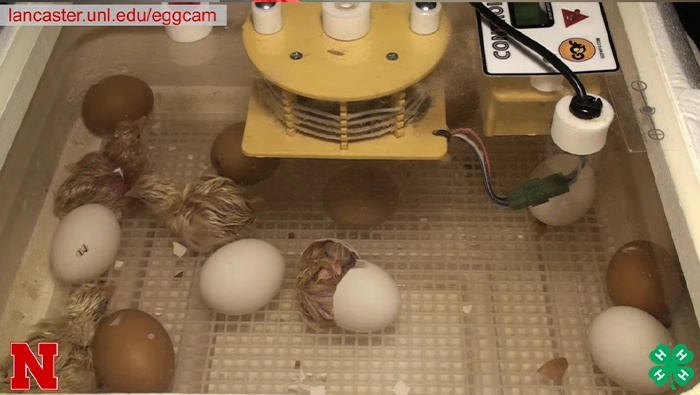
In 1981, embryology studies entered the school system’s new third grade curriculum. The hatchery program has been part of the classroom experience ever since. A “4-H Egg Cam” was added in 2002, thanks to a Lincoln-Northeast Kiwanis Club donation of US$400 — so that even more students could watch and learn along with their families and friends.
Keeping it going
Today, the third-grade embryology unit begins with a classroom presentation by Nebraska Extension staff about embryo development, the parts of an egg and the difference between fertilized eggs and eggs purchased in supermarkets. Each classroom receives 12 fertilized chicken eggs — six white and six brown— so they can examine genetic differences.
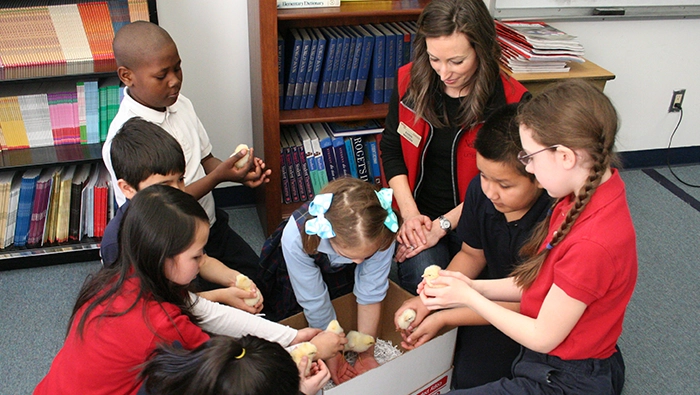
Students turn the eggs three times daily and provide water for humidity in the incubators. After seven days, Nebraska Extension staff shine a bright light through the eggs so students can determine whether the embryos are developing. The incubation period lasts about 21 days, while students carefully watch for signs of “pipping” — when the chicks begin to peck through their shells. Students care for the newly hatched chicks for two to three days, after which the extension’s staff give the chicks to local farmers to raise.
In addition to the science, says Nebraska Extension Assistant Madelaine Polk, students learn responsibility and teamwork.
“I cannot describe the excitement from students when we first visit the classroom and bring their fertilized eggs,” says Polk, who currently leads the program. “The students are always so eager to learn about the development process and hear about the different stages. One of the things I love is how closely they pay attention to all the care directions to follow while incubating and after the chicks hatch.”
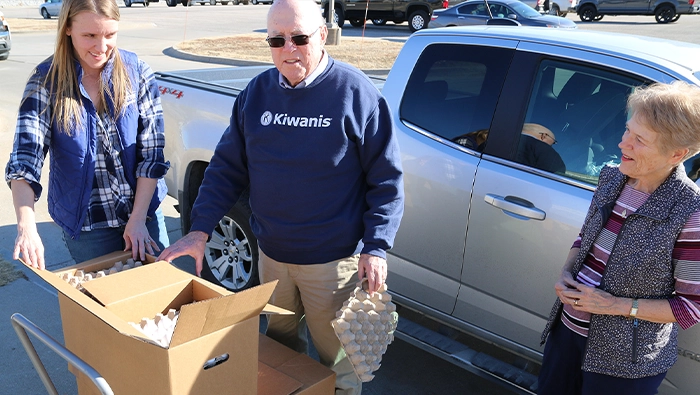
The Lincoln-Northeast Kiwanis Club has been continually committed to the program. Until shortly before his death in 2016, Earl remained involved in the process on behalf of the club, driving to the hatchery to pick up the eggs. Club members Rick and Susan Waldren now volunteer for that duty.
“For 50 years, the embryology program has been a labor of love made possible by passionate educators, dedicated volunteers, generous partners and curious young minds,” says Tracy Anderson, educator at the Nebraska Extension. “Thank you to everyone who has helped bring this hands-on science experience to life.”