Key Club receives Carnegie grant

Key Club receives Carnegie grant

US$600,000 will bring more students into Key Club and the GLC Master Class.

By Erin Chandler 

The Kiwanis Children’s Fund has received a historic grant that will support the growth of Key Club International over the next two years. The US$600,000 grant from the Andrew Carnegie Foundation — the largest ever awarded to Key Club and the second biggest to the Kiwanis Children’s Fund — will fund efforts to charter new clubs in high-growth districts and double the size of the Global Leadership Certificate Master Class. 

Executive Director of Kiwanis Youth Programs Michelle Study-Campbell says, “We are thrilled for the opportunity to expand Key Club International and to provide more opportunities for students across the country. Thanks to the Carnegie Foundation’s investment in Key Club International, more students will have the chance to learn leadership skills through meaningful service — skills that prepare them to be civically engaged and informed community leaders.” 

Growing Key Club
With this grant, Key Club will develop a field-based strategy that will focus on building new clubs in Key Club’s fastest growing districts. The plan will begin with local Kiwanis volunteers working toward the goal of adding 22,000 new Key Club members in two years — enough to conduct an estimated 1 million additional hours of community service.   

Research shows that students who take part in structured service and leadership programs in high school are more likely to volunteer and stay civically engaged well into adulthood, and those benefits grow the longer a student stays involved. Key Club’s own numbers tell a similar story: In the organization’s 2025 survey of members, 96% of students said Key Club gave them meaningful service opportunities, and 89% said it helped them grow as a leader.  

Key Club currently is present in about 15% of U.S. high schools while it continues to expand internationally. That leaves students in over 26,000 U.S. schools without access to the laboratory of leadership that Kiwanis has supported for more than a century. This grant is intended to help more students and communities benefit from the growth, engagement and fulfillment that Key Club provides. 

Doubling the GLC Master Class
This grant will also allow the GLC Master Class to grow from 50 to 100 students per year in 2027 and 2028. Demand for the master class — the in-person culmination of a 40-course online program grounded in Key Club’s core values of leadership and service — consistently has exceeded its 50-person capacity at the Key Club International convention.

For each student who takes part in the GLC Master Class, the grant will provide funding to cover up to 50% of convention costs. In the 2025 Key Club member survey, students identified conventions and global service events as among the experiences they most want but have the least access to. This grant will help alleviate the financial barrier to these opportunities. This opportunity will be offered for the first time at the 2027 Key Club International Convention in Washington, D.C.  

How Kiwanians can help
Want to help Key Club reach its goal of 22,000 new Key Club members and 200 GLC Master Class participants over the next two years? Here is what Kiwanis members can do: 

  • Sponsor a new Key Club in a school that currently doesn’t offer the program. 
  • Promote the responsibilities of Kiwanis sponsorship of Key Club. 
  • Support Key Club by making a gift to the Kiwanis Children’s Fund. 
  • Spread the word about the Global Leadership Certificate, which is free and open to every Key Club member. 

As always, Key Club’s successful expansion depends on the Kiwanians who support the program. The Carnegie Corporation grant is not just an exciting development for Key Club — it’s an opportunity for the entire Kiwanis family. 
Grants support physical and emotional health

Grants support physical and emotional health

11 Circle K International projects receive Tomorrow Fund grants.

By Erin Chandler

In college and university communities around the world, members of Circle K International are making a difference through service and leadership. The Kiwanis Children’s Fund established the Tomorrow Fund to help these clubs and districts implement more creative solutions to problems and make the greatest possible positive impact.  

This July, the Children’s Fund awarded 11 Tomorrow Fund grants — all to help CKI members improve the physical and emotional health of children, families and other vulnerable people in communities across the United States and in the Philippines. 

Trunk or Treat for Differently Abled Children and Adults
Circle K International of Baldwin Wallace University, Ohio, U.S.
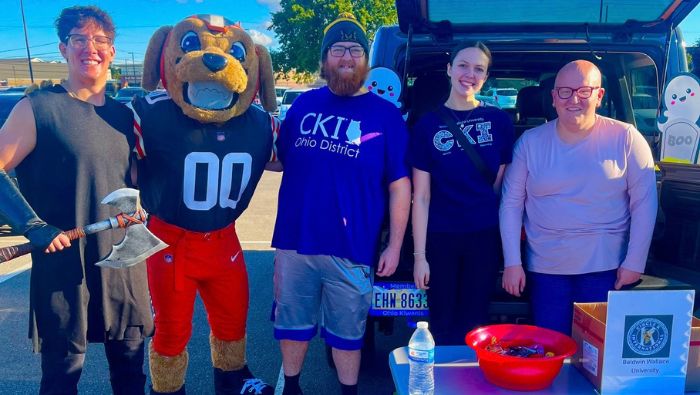
A Tomorrow Fund grant will help Baldwin Wallace University CKI purchase candy for its annual Trunk or Treat for Differently Abled Children and Adults. A safe and welcoming event, it takes place in a flat parking lot with candy stations at decorated vehicles grouped closely together — so it’s accessible to people of all abilities. Volunteers, including those from Berea Mid-Park High School Key Club, Community West Cuyahoga Aktion Club and the Kiwanis Club of Middleburg Heights, hand out treats to trick-or-treaters who have disabilities or special needs and their families — regardless of age or ability to say “trick-or-treat.” The event, which grows each year, also features food trucks, music, entertainment, crafts and resources for the disabled community. This year, the Trunk or Treat is ready to welcome 500 trick-or-treaters to dress up and have fun with families like theirs. 

NICU/PICU Project
Circle K International of Bowling Green State University, Ohio, U.S.
Bowling Green State University CKI will assemble 100-150 care bags for children and families in ProMedica Toledo Hospital’s Neonatal and Pediatric Intensive Care Units. A Tomorrow Fund grant will help the club supplement donations and its own purchases to stock reusable grocery bags with diapers and wipes, stuffed animals, fidget toys, art supplies, board books and more. The club then will hold a packing event to assemble the bags. The club hopes the bags — which will go to hospitalized kids and their siblings — will take some weight off families in difficult circumstances and let them know they are not alone. 

Collecting and Creating Kits for FSW School Pantry
Circle K International of Florida SouthWestern State College, Florida, U.S.
A Tomorrow Fund grant will help Florida SouthWestern State College CKI support the campus food pantry, which provides food and basic personal care items to students in need. The club already holds drives and fundraisers to acquire pantry supplies, which club members assemble into kits for easier distribution. They hope that increasing access to food and essential items on campus will allow more students to focus on their education. 

Jail Crochet Class
Circle K International of Northern Illinois University, Illinois, U.S.
Northern Illinois University CKI will support the school’s new Fiber Arts Club in an important project: teaching inmates at the DeKalb County Jail how to crochet. A Tomorrow Fund grant will help cover the costs of supplies and transportation for the eight to 12 instructors of weekly crochet classes. A past iteration of the program proved popular at the jail, and similar classes at other facilities have helped to reduce recidivism, teach prosocial skills, improve mental well-being and give participants a way to express their creativity. The club hopes to offer even more art classes for inmates, in subjects such as sketching, painting and tattoo artistry. 

Brush, Wash and Play 3.0
Circle K International of Southern Luzon State University Lucban, Quezon, Philippines
SLSU Lucban CKI plans to strengthen children’s foundations for lifelong health by bringing back its Brush, Wash and Play outreach program. Club members will visit daycares in the community — and through interactive storytelling, demonstrations and play-based learning, they’ll help kids form healthy habits around basic hygiene practices like washing hands and brushing teeth. A Tomorrow Fund grant will help cover transportation expenses and provide toothbrushes, toothpaste, soap, shampoo and towels for kids to take home. Club members hope the project will help children and families reduce the spread of disease. 

Comfort in Care: Chemo Relief Kits Project
Circle K International of the University of Cincinnati, Ohio, U.S.
University of Cincinnati CKI is starting a new tradition to mark Breast Cancer Awareness Month this October by assembling and distributing “care kits” for people undergoing chemotherapy. A Tomorrow Fund grant will help stock the reusable tote-bag kits with tie blankets made by club members, fuzzy socks, journals, essential oils and lotion, petroleum jelly, hydration packs, snacks and candy. Each kit also will contain a handwritten note. Club members hope the kits will provide comfort and encouragement for cancer patients, not just upon receipt, but throughout treatment.  

Hygiene Baskets for Craig’s Doors
Circle K International of the University of Massachusetts Amherst, Massachusetts, U.S.
University of Massachusetts Amherst CKI will use its Tomorrow Fund grant to purchase hygiene supplies — including soap, bandages, shampoo, feminine hygiene products and more — that will be distributed in baskets at Craig’s Doors, a local emergency shelter. Each basket will contain enough supplies for about one month. The club plans to make this an ongoing project, adapting supply basket contents to each season. 

Miles for a Mission
Circle K International of Virginia Tech, Virginia, U.S.
Virginia Tech CKI plans to host a 5K fundraiser with a community-focused twist: the first-place finishing man and woman each choose a charity or nonprofit to receive a portion of the funds raised. The goal is to shine a spotlight on smaller organizations that benefit the community — and the club hopes the prospect of bringing funds and attention to their favorite organization will attract more participants. Club members will review the selected organizations to make sure they are legitimate. A Tomorrow Fund grant will help to offset the event’s operational costs, freeing more money for the winning causes. 

South Division Community Garden
Circle K International Capital District, U.S.
For people experiencing food insecurity in its Southern Division, the CKI Capital District will install a community garden that offers access to affordable, fresh produce. The garden’s environmental sustainability will even be enhanced by raised garden beds, native pollinator plants, an irrigation system and a composting system. CKI members will maintain the garden and lead educational workshops to teach community members about conservation and sustainable practices. A Tomorrow Fund grant will go toward construction supplies, educational materials for the workshops and communal gardening tools. 

Meal Packing for a Purpose
Circle K International New England District, U.S.
A Tomorrow Fund grant will go toward supplies for a meal-packing event at the CKI New England District Convention. Attendees from across the district will work together to pack thousands of nutritious, shelf-stable meals to be distributed to food pantries, shelters, schools, backpack programs and community organizations throughout the district. The event, held in partnership with End Hunger New England, will help to address food insecurity — the goal of the district governor’s project — and inspire CKI members to host similar initiatives with their own clubs and communities. 

Smiling with Service: Cratering Cavities
Circle K International Texas-Oklahoma District, U.S.
In support of this year’s governor’s project, Smiling with Service, CKI members at the Texas-Oklahoma District Fall Retreat aim to create 500 dental care packages for children. Lack of access to dental care is a pervasive problem throughout the district. A Tomorrow Fund grant will help to supply toothpaste, toothbrushes, dental floss, two-minute toothbrushing timers and coloring books for the kits, which will be distributed throughout the district. Each of the 500 children who receive a kit also will find a message from the person who packed it.  

How to get involved
Does your Circle K International group have a project idea that could benefit from a Tomorrow Fund grant? Learn more about the grant and how to apply. If your Kiwanis club does not yet sponsor a CKI club, learn about the advantages of chartering one.   

The Kiwanian who changed my life

The Kiwanian who changed my life

A letter of recommendation leads to a lifetime of service — and a lifelong friendship.

By Dan L. Connolly, past governor of the Kiwanis California-Nevada-Hawaii District 

Nearly 50 years ago, an educator took the time to believe in a student who was trying to determine where he belonged. I was that student — and that educator’s simple act changed the direction of my life. 

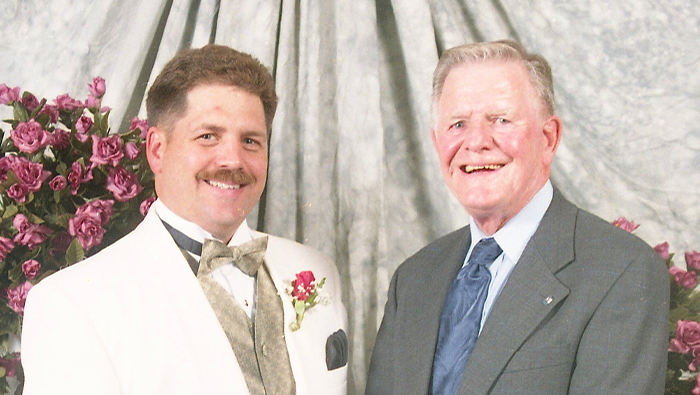
I first met Robert “Bob” Jolley during the summer of 1976. Before beginning my freshman year at Andrew P. Hill High School in San Jose, California, U.S., Jolley was the school’s assistant principal of student activities. (We are pictured above in 2000, during the 20th anniversary reunion of my graduating class.) At the time, I could not have imagined that he would become my mentor, lifelong friend, fellow Kiwanian and ultimately the best man at my wedding. 

Looking back, I realize that opportunity began with something very simple: an educator who believed in a student and took the time to write a letter of recommendation. 

Starting service
During my years at Andrew Hill High School, I became involved in Key Club, student government, the Superintendent’s Advisory Committee, Civil Air Patrol and numerous student activities. Jolley’s office often felt like a second classroom. Through rallies, assemblies, athletics, leadership conferences, orientation programs and countless other activities, he taught leadership, responsibility, teamwork, service and accountability in ways no textbook could. 

In my freshman year, I entered a national competition that recognized young people for leadership, community service, school involvement and character. Assistant Principal Jolley graciously wrote one of my letters of recommendation, and I was selected as a winner of Parade Magazine’s Young Columbus Contest.  

As part of the program, I participated in The Iberian Experience, an educational and cultural journey through Spain and Portugal. It was my first trip outside the United States. For a young man from East Side San Jose, it was life-changing. The experience expanded my horizons, introduced me to a larger worldand showed me possibilities I had never imagined.  

Keeping a community
Near the end of my sophomore year, my parents informed me that they would be moving to Sonora, California. 

The news was devastating. 

My family did not have much money when I was growing up, and we moved frequently. I never stayed anywhere long enough to feel fully connected. But Andrew Hill High School was different. It became the first place where I established roots, built genuine friendships, discovered leadership opportunities and felt part of something bigger than myself. 

Jolley understood. Through conversations with my parents, my aunt in San Jose and school district leaders, he helped make it possible for me to remain in San Jose and complete my education at Andrew Hill. I worked, paid rent, lived with family and stayed. 

Jolley was not simply helping a student stay at a school. He was helping a young man remain connected to the first community where he truly felt he belonged. 

Because I stayed, I continued my involvement in student leadership and eventually had the honor of serving as student body president during my senior year. Equally important, Jolley continued to guide and encourage me — and occasionally remind me that leadership and good judgment are not always the same thing. 

Lifelong inspiration
Jolley’s influence didn’t end at graduation. When I later attended the University of Idaho in the U.S., I remained active in Civil Air Patrol and became involved in Circle K International (CKI). I eventually had the privilege of serving as president of the CKI Club at the University of Idaho. 

Looking back now, I can see a clear path. 

The leadership opportunities Bob encouraged in high school led to Key Club, which was followed by CKI in college. They continued through Civil Air Patrol service and eventually developed into decades of Kiwanis involvement and community leadership. Each experience built upon the previous one.  

The common thread was not a particular title or position; the common thread was service. 

Jolley taught that leadership was not measured by recognition or office held. Leadership was measured by the willingness to help others, create opportunities and invest in people. 

Our relationship continued long after high school. Jolley became a mentor, advisor, friend and fellow Kiwanian — and eventually the best man at my wedding. By the time Jolley stood beside me at my wedding, he had become far more than a mentor. He had become part of my family. 

Years later, after his passing, I had the privilege of officiating his celebration of life. 

A Kiwanian’s legacy
Jolley’s own commitment to Kiwanis service was extraordinary. He rose through the organization to become a Kiwanis International vice president (1998-99) and touched countless lives through his leadership, mentorship and example. 

In many ways, I spent much of my life following the path he helped illuminate. 

Recently, I was honored to be selected for induction into the Thomas P. Ryan Hall of Fame of the East Side Union High School District. The recognition caused me to reflect not only on the opportunities I had received, but the people who made those opportunities possible. Foremost among them was Robert Jolley. 

The true measure of our lives is not found in titles, awards or accomplishments. It is found in the lives we touch, the communities we serve and the opportunities we create for others.  

Educators and mentors often plant seeds whose flowers they may never see. Jolley planted those seeds through encouragement, trust, responsibility, friendship and service. Those seeds grew into a lifetime of leadership, volunteerism, community involvement and a commitment to helping others. From Key Club at Andrew P. Hill High School to Civil Air Patrol to serving as president of the CKI Club at the University of Idaho, and eventually through decades of Kiwanis service, the lessons he taught continued to guide my path. 

No matter where life takes us, a part of us remains that young person trying to find a place in the world. I found that place because Robert “Bob” Jolley believed in me. Nearly 50 years later, I remain profoundly grateful.