
subvenciones ayuda a transformar la educación de los niños

subvenciones ayuda a transformar la educación de los niños

Four clubs on four continents will help kids learn and grow in new ways. 

Por Erin Chandler

In August, the Kiwanis Children’s Fund awarded 22 club grants to support outstanding Kiwanis club projects on four continents. The following four projects — one from each region — show how Kiwanians can transform kids’ education. By making reading a fun event, organizing a trip that expands horizons, introducing kids to art and creativity, and providing a space for specialized learning, these projects turn students into lifelong learners. 
Dr. Seuss Reading Day
The Kiwanis Club of Carrollton, Georgia, U.S.
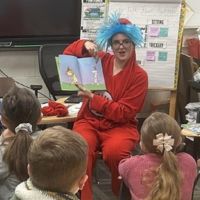
Each year in March, around 50 volunteers from the Kiwanis Club of Carrollton and the community visit local schools to throw a birthday party for Dr. Seuss, author of classic children’s books such as “The Cat in the Hat” and “Green Eggs and Ham.” The volunteers choose a Dr. Seuss book to read to or alongside the students, then talk with them about the importance of reading, both in school and at home with family members. With help from a Kiwanis Children’s Fund club grant, every student will then take home a copy of the book. This festive spin on story time gets kids excited about reading. 

Belgium Week for Children and Young People with Disabilities
Kiwanis Club of Innsbruck, Austria
Each year, local Kiwanis clubs take children from two special-needs schools in the Lienz district of Austria on a trip to Belgium. There is a lack of enrichment opportunities for children with disabilities in the area, and families and schools struggle to fund them on their own. A Kiwanis Children’s Fund grant helped fund this year’s trip for 18 students, who spent a week cycling, swimming, hiking, doing gymnastics and pottery, completing a high ropes course and participating in group games. The trip gives students an opportunity to develop their athletic and creative skills, but it also builds their confidence and communication skills — which help them cope with challenges, feel a sense of belonging and form friendships through shared activities.  

Art That Transforms
Kiwanis Club of Katías, Colombia
The Kiwanis Club of Katías has a history of visiting remote schools to deliver programs on nutrition, recreation, leadership and values. Now they are working with Andes Pinta, an organization that has developed art initiatives in urban areas, to bring art education to 10 rural schools without easy access to artistic and cultural programs. Art That Transforms, which has the support of the Department of Education and local teachers, will bring Kiwanis volunteers to teach a variety of painting and drawing techniques in three-month cycles and follow-up sessions over the course of two years. The club hopes that hundreds of students will develop new artistic skills — and with them, their self-expression and creativity. The program will culminate in an art exhibition in an urban center of the Andes, where communities, families and the students themselves will see their creations displayed. A Kiwanis Children’s Fund grant will help pay for art and educational supplies, transportation and costs associated with mounting the exhibition. 

Sensory Room Phase 2: Advanced Multisensory Integration
Kiwanis Club of Kuala Lumpur, Malaysia
The Kiwanis Club of Kuala Lumpur is stepping up to help expand services offered by the Kiwanis Down Syndrome Foundation National Centre. Over 40% of the children who receive educational and physical therapy services at the Centre also face sensory processing challenges. The Centre’s new sensory room was built to address these needs — but it still needed specialized therapeutic tools recommended by a team of caregivers and experts who work closely with the children at the Centre. A Kiwanis Children’s Fund club grant will help purchase items that help children with visual tracking, tactile defensiveness and emotional self-regulation. With a hammock swing, sensory liquid-gel number tiles, a padded sequin wall panel, crash pad, infinity mirror, infinity tunnel and projector, 100 students will be better prepared for future school integration. 

More club grant projects
Other projects that received club grants in August include:    

  • Library renovations from the Kiwanis Clubs of Domodossola, Italy, and North Manchester, Indiana, U.S. 
  • A socio-emotional education program from the Kiwanis Club of Bucaramanga, Colombia 
  • A story time and book giveaway from the Kiwanis Club of La Palma, California, U.S. 
  • A school supply drive from the Kiwanis Club of Scottsdale, Arizona, U.S. 
  • A community garden from the Kiwanis Club of Rogers City, Michigan, U.S. 
  • The “Feed. Fuel. Teach.” nutrition initiative from the Kiwanis Club of Topsail Island Area, North Carolina, U.S. 
  • A middle school track and field event from the Kiwanis Club de Amigos, Tucson, Arizona, U.S. 
  • Meal packing events from the Kiwanis clubs of the Azaela City, Palatka, Florida, U.S., and Presque Isle, Maine, U.S. 
  • A winter clothing giveaway for local students from the Kiwanis Club of Joplin, Missouri, U.S. 
  • A food delivery and health education program from the Kiwanis Club of Acacías-Meta, Colombia 
  • Personal care and hygiene kits for students from the Kiwanis Club of Dexter-Sunrise, Maine, U.S. 
  • New or revitalized parks and playgrounds from the Kiwanis Club of Lakeshore, Sault St. Marie, Ontario, Canada; and in the U.S. from the Kiwanis Clubs of Pawleys Island, South Carolina; Redmond, Oregon; Garden City, Michigan; and Henderson Center, Eureka, California.  

How you can help
The Kiwanis Children’s Fund makes grants that improve the lives of children around the world by identifying projects that create a continuum of impact in a child’s life — one that spans their entire childhood and sets them up for a bright future. With gifts to The Kiwanis Possibility Project, the Children’s Fund ensures that its grantmaking has the greatest possible impact, supporting projects that target the Kiwanis causes — health and nutrition, education and literacy, and youth leadership development — whether through a Kiwanis club’s local service project or a club’s partner. 

Learn how your club can apply for a grant to help kids in your community. If you are interested in extending your and your club’s impact beyond your community, support The Kiwanis Possibility Project.   

8 formas de fomentar el amor por la lectura en los niños

8 formas de fomentar el amor por la lectura en los niños

With local partners and a few ideas, your club can support literacy.

By Destiny Cherry 

Education and literacy represent one of Kiwanis International’s three causes. Looking for ways your club can support kids’ love for reading? Here are eight ideas to do it through service, fundraising and community partnership: 

  1. Read to children at a local library, children’s hospital or school. In addition to serving kids, it’s a way to build connections with organizations in your community. Host story time at your local library, read to kids in after-school programs and during designated class times, or read to young patients in a children’s hospital. If you have multilingual club members, diversify your reading languages for kids who are multilingual or learning a new language.  
  2. Tutor at schools in your area. When you partner with schools, your club gains access to students across age groups and academic levels. While high school tutors usually require subject-specific knowledge or more advanced educational experience, elementary and lower middle-grade levels are more flexible and do not typically require college degrees. Depending on the school and the instructor’s comfort levels, tutoring can take place in a variety of settings — whether it’s during class time, after school or even as summer-school service.  
  3. Hold a book drive. Your club can host the event at a community-centered location, offering snacks and drinks during your hours of operation — and even provide Kiwanis-branded items to keep your club in people’s minds. Promote the donation of books that reflect a range of races, ethnicities, religions and languages. Distribute the books to multiple locations — or partner with a single location for the event and donate the books there at the end of the drive.  
  4. Start and fill a Little Free Library. A Kiwanis International partner, Little Free Library expands access to books through free, accessible exchange. In your community, it’s a visible testament to the club’s commitment to education and literacy.  
  5. Conduct a reading challenge on social media. Whether it’s on your club’s social media accounts or on a town/community account, a challenge could take a variety of forms. One idea: The first family to read 50 books and submit the reviews of each book as evidence are the winners. Another idea: Provide a bingo card of reading-related tasks — such as reading in a park or checking out a library book — that a family would fill out and then submit with a photo of each activity. Add book-related prizes or bookstore gift cards as incentives. 
  6. Create reading kits for kids. Here’s a way to get all club membes involved in a service project. Reading kits require only a few supplies — colored paper, markers, pencils, glue sticks and scissors — with different members contributing different supplies. One idea: A member creates a background, leaving space for a child to fill in characters and continue the story. After creating the kits, take them to a children’s hospital or to a library for story time — and complete the stories alongside the kids. Include handmade  bookmarks to add some flair. 
  7. Fundraising for e-readers. With a built-in dictionary, translators, audiobook capabilities and easy access to books, e-readers have been an increasingly useful way to help children who struggle with reading. But they’re not always available in large quantities to libraries, schools, hospitals and childcare centers. Raising money for one (or all) of these organizations can allow kids who are falling behind to bridge the gap with their peers. Don’t forget our five fundraising fundamentals!  
  8. Sponsor a “literacy corner.” Approach local businesses about putting a club-sponsored “literacy corner” in their locations. It can be as simple as a bookshelf, basket or small table with children’s books and learning games in the corner of a coffee shop, diner, barber shop/salon, laundromat or local retail store. Your club can take responsibility for accumulating the items while the business oversees the maintenance and cleanliness of the corner. Hold a fundraiser for the corner or conduct a drive for books and games. The business could also encourage customers to bring in lightly used books or games.  

More tips and ideas
There’s no better source of inspiration than real success. Check out some past success stories from the Kiwanis family. And get more tips for promoting literacy. 

El programa de lectura de un club atrae a socios empresariales 

El programa de lectura de un club atrae a socios empresariales 

Ver cómoClub Kiwanis en Luisiana, EE.UU, recluta empresas y organizaciones de la zona.

Por Julie Saetre 

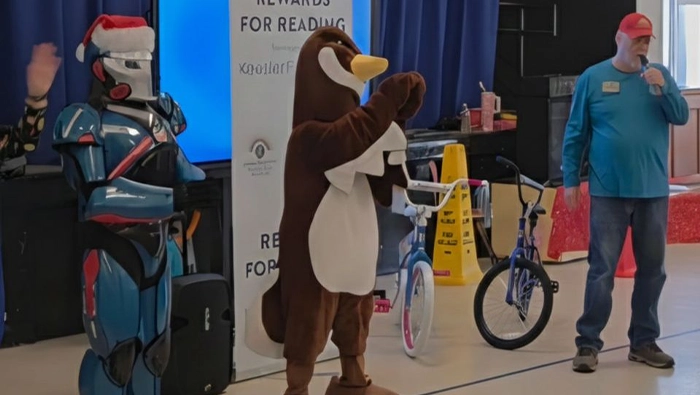
En 2007, Mel Dussel llevaba solo unos meses como socio de su club « Club Kiwanis » cuando el presidente de este le pidió que se pasara por una escuela primaria de la zona. La asociación « Club Kiwanis » de Dawn Busters, de Metairie (Luisiana), EE.UU, había puesto en marcha recientemente un programa llamado «Rewards for Reading» (Recompensas por leer), a través del cual los niños ganaban premios e incentivos por mejorar sus habilidades lectoras. Aquel día de diciembre, el club iba a entregar a uno de los participantes en el programa una bicicleta nueva, algo que hacía dos veces al año. 

Como representante del club en la « evento », Dussel se sintió tan conmovido que ofreció la segunda de este año como recompensa adicional, prometiendo sustituirla él mismo para el próximo sorteo programado.

Pronto se encontró al frente del programa «Recompensas por leer» y quiso ampliar su alcance. Se dedicó a aumentar el número de empresas afiliadas al club, lo que también supondría un incremento de las donaciones en especie y en efectivo.

Ahí es donde entraron en juego las habilidades de Dussel en ventas y creación de redes. Un amigo de un amigo le sugirió que se pusiera en contacto con alguien de un local de laser tag de la zona. Ese negocio se convirtió en el primer socio corporativo que Dussel incorporó al club lista presencial. Para el programa de lectura, eso supuso una donación de entradas para el laser tag para los niños participantes, además de descuentos en entradas adicionales y comida en el local.

A continuación, los participantes y los resultados
A medida que se fue difundiendo la iniciativa «Rewards for Reading», las empresas comenzaron a ponerse en contacto con nosotros. Por ejemplo, un equipo local de béisbol de la AAA donó un vale de entrada para cuatro personas a cada participante del programa dos veces al año, organizó un partido especial dedicado a los niños, proporcionó transporte en autobús de ida y vuelta al « evento » e invitó a los niños a correr por las bases tras el partido.

Después de que la cercana Nueva Orleans acogiera una Super Bowl, la Greater New Orleans Sports Foundation —que también es miembro corporativo— donó suficientes chaquetas, gorras, camisetas y otros artículos promocionales sobrantes como para llenar un camión de 18 ruedas. La fundación siguió realizando donaciones de artículos promocionales tras otros grandes eventos deportivos celebrados en la ciudad.

Las afiliaciones corporativas han tenido un efecto dominó en todos los programas e iniciativas del club. Por ejemplo, el club solía destinar 10 000 dólares al año a proporcionar alimentos a los miembros de la comunidad con necesidades; ahora ese proyecto cuenta con financiación completa. De hecho, el club destina esos 10 000 dólares a la beca « becas », que concede a los alumnos de último curso de secundaria de cada uno de los cinco Key Clubs que patrocina. 

Cómo se mide el éxito
En los últimos 19 años, el club ha conseguido más de 200 nuevos socios, entre los que se incluyen casi 50 empresas. Los niños que participan en el programa «Rewards for Reading» han recibido más de 20 millones de dólares estadounidenses en premios, y más de 1.500 de ellos se han llevado a casa bicicletas nuevas. 

La lista actual de miembros del club, disponible en membresía lista presencial , parece un «Quién es quién»: el teniente gobernador de Luisiana; el comisario de Agricultura; el alcalde de Kenner (Luisiana); el superintendente de escuelas; miembros del ayuntamiento; la American Culinary Foundation de Nueva Orleans; siete bancos y tres cooperativas de crédito federales. 

Según Dussel, todos ellos forman parte de Dawn Busters gracias al programa de lectura, pero no solo como donantes.

«Todas estas personas del mundo empresarial no solo son socios, patrocinadores y donantes», añade. «También participan». 

Cómo puede hacerlo tu club
Encontrar socios corporativos y patrocinadores no es algo exclusivo de los clubes grandes, afirma Dussel. Lo que más importa son los proyectos y programas de un club.

«La gente dice: “Bueno, pues tenéis un club grande”», añade. «No siempre hemos sido un club grande. Me da igual que tengáis un pueblo de 50 habitantes».

«Llevo toda la vida dedicándome a las ventas. Pero si no tienes un producto que vender, no vas a vender nada. … Sin el programa de lectura, no tendríamos dos tercios de [las afiliaciones corporativas]». 

Para los clubes que deseen poner en marcha sus propias iniciativas de « membresía » corporativo, Dussel ofrece algunos consejos que pueden resultarles útiles: 

  • Identifica a los posibles clientes potenciales. ¿Cómo pueden beneficiarse mutuamente usted y una nueva organización afiliada? «Clubes Kiwanis [es como] un negocio», afirma Dussel. «¿A quién quiere tener a su lado en su negocio? ¿A quién puede ayudar?»  
  • Estad preparados. Dussel lleva siempre consigo tarjetas rojas en las que figura la inscripción «Dawn Busters Metairie Rewards for Reading» y su dirección de correo electrónico correo electrónico , y se las entrega a quienes muestran interés. «Si hay más de dos personas en la sala, busco [posibles interesados]», afirma. Les pide que le envíen un correo electrónico a correo electrónico para poder explicarles con más detalle en qué consiste el club y en qué consiste el programa de lectura.  
  • Pide a los posibles socios que intervengan en las reuniones. Dussel calcula que uno de cada cuatro ponentes invitados acaba convirtiéndose en socio del club o en socio corporativo. 
  • Consigue los datos de contacto del representante designado por la empresa miembro. «Cuando consigues a estos socios, no solo los consigues a ellos», afirma Dussel. «Consigues todo su círculo». 

Más allá de las necesidades e intereses específicos, añade, los socios corporativos son como el resto de socios: necesitan disfrutar de la experiencia del club. Dussel sugiere reservar tiempo en la agenda del club para celebraciones y eventos sociales. Recientemente, el club consiguió tres nuevos socios tras una noche de bolos en una sala de juegos local.