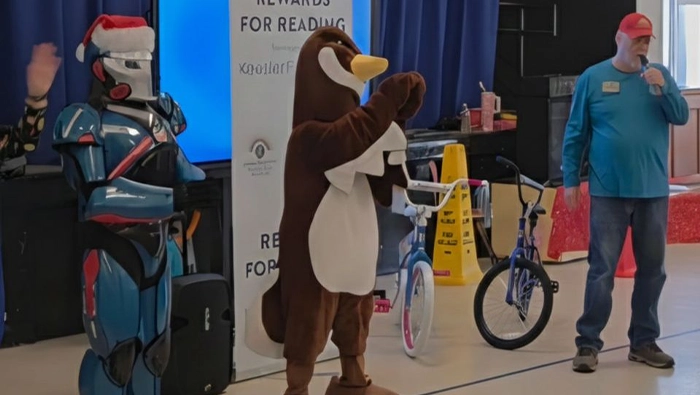

beurzen help mee om het onderwijs voor kinderen te veranderen

beurzen help mee om het onderwijs voor kinderen te veranderen

Four clubs on four continents will help kids learn and grow in new ways. 

Door Erin Chandler

In August, the Kiwanis Children’s Fund awarded 22 club grants to support outstanding Kiwanis club projects on four continents. The following four projects — one from each region — show how Kiwanians can transform kids’ education. By making reading a fun event, organizing a trip that expands horizons, introducing kids to art and creativity, and providing a space for specialized learning, these projects turn students into lifelong learners. 
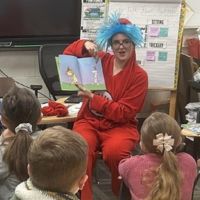
Dr. Seuss Reading Day
The Kiwanis Club of Carrollton, Georgia, U.S.
Each year in March, around 50 volunteers from the Kiwanis Club of Carrollton and the community visit local schools to throw a birthday party for Dr. Seuss, author of classic children’s books such as “The Cat in the Hat” and “Green Eggs and Ham.” The volunteers choose a Dr. Seuss book to read to or alongside the students, then talk with them about the importance of reading, both in school and at home with family members. With help from a Kiwanis Children’s Fund club grant, every student will then take home a copy of the book. This festive spin on story time gets kids excited about reading. 

Belgium Week for Children and Young People with Disabilities
Kiwanis Club of Innsbruck, Austria
Each year, local Kiwanis clubs take children from two special-needs schools in the Lienz district of Austria on a trip to Belgium. There is a lack of enrichment opportunities for children with disabilities in the area, and families and schools struggle to fund them on their own. A Kiwanis Children’s Fund grant helped fund this year’s trip for 18 students, who spent a week cycling, swimming, hiking, doing gymnastics and pottery, completing a high ropes course and participating in group games. The trip gives students an opportunity to develop their athletic and creative skills, but it also builds their confidence and communication skills — which help them cope with challenges, feel a sense of belonging and form friendships through shared activities.  

Art That Transforms
Kiwanis Club of Katías, Colombia
The Kiwanis Club of Katías has a history of visiting remote schools to deliver programs on nutrition, recreation, leadership and values. Now they are working with Andes Pinta, an organization that has developed art initiatives in urban areas, to bring art education to 10 rural schools without easy access to artistic and cultural programs. Art That Transforms, which has the support of the Department of Education and local teachers, will bring Kiwanis volunteers to teach a variety of painting and drawing techniques in three-month cycles and follow-up sessions over the course of two years. The club hopes that hundreds of students will develop new artistic skills — and with them, their self-expression and creativity. The program will culminate in an art exhibition in an urban center of the Andes, where communities, families and the students themselves will see their creations displayed. A Kiwanis Children’s Fund grant will help pay for art and educational supplies, transportation and costs associated with mounting the exhibition. 

Sensory Room Phase 2: Advanced Multisensory Integration
Kiwanis Club of Kuala Lumpur, Malaysia
The Kiwanis Club of Kuala Lumpur is stepping up to help expand services offered by the Kiwanis Down Syndrome Foundation National Centre. Over 40% of the children who receive educational and physical therapy services at the Centre also face sensory processing challenges. The Centre’s new sensory room was built to address these needs — but it still needed specialized therapeutic tools recommended by a team of caregivers and experts who work closely with the children at the Centre. A Kiwanis Children’s Fund club grant will help purchase items that help children with visual tracking, tactile defensiveness and emotional self-regulation. With a hammock swing, sensory liquid-gel number tiles, a padded sequin wall panel, crash pad, infinity mirror, infinity tunnel and projector, 100 students will be better prepared for future school integration. 

More club grant projects
Other projects that received club grants in August include:    

  • Library renovations from the Kiwanis Clubs of Domodossola, Italy, and North Manchester, Indiana, U.S. 
  • A socio-emotional education program from the Kiwanis Club of Bucaramanga, Colombia 
  • A story time and book giveaway from the Kiwanis Club of La Palma, California, U.S. 
  • A school supply drive from the Kiwanis Club of Scottsdale, Arizona, U.S. 
  • A community garden from the Kiwanis Club of Rogers City, Michigan, U.S. 
  • The “Feed. Fuel. Teach.” nutrition initiative from the Kiwanis Club of Topsail Island Area, North Carolina, U.S. 
  • A middle school track and field event from the Kiwanis Club de Amigos, Tucson, Arizona, U.S. 
  • Meal packing events from the Kiwanis clubs of the Azaela City, Palatka, Florida, U.S., and Presque Isle, Maine, U.S. 
  • A winter clothing giveaway for local students from the Kiwanis Club of Joplin, Missouri, U.S. 
  • A food delivery and health education program from the Kiwanis Club of Acacías-Meta, Colombia 
  • Personal care and hygiene kits for students from the Kiwanis Club of Dexter-Sunrise, Maine, U.S. 
  • New or revitalized parks and playgrounds from the Kiwanis Club of Lakeshore, Sault St. Marie, Ontario, Canada; and in the U.S. from the Kiwanis Clubs of Pawleys Island, South Carolina; Redmond, Oregon; Garden City, Michigan; and Henderson Center, Eureka, California.  

How you can help
The Kiwanis Children’s Fund makes grants that improve the lives of children around the world by identifying projects that create a continuum of impact in a child’s life — one that spans their entire childhood and sets them up for a bright future. With gifts to The Kiwanis Possibility Project, the Children’s Fund ensures that its grantmaking has the greatest possible impact, supporting projects that target the Kiwanis causes — health and nutrition, education and literacy, and youth leadership development — whether through a Kiwanis club’s local service project or a club’s partner. 

Learn how your club can apply for a grant to help kids in your community. If you are interested in extending your and your club’s impact beyond your community, support The Kiwanis Possibility Project.   

8 manieren om kinderen van lezen te laten houden

8 manieren om kinderen van lezen te laten houden

With local partners and a few ideas, your club can support literacy.

By Destiny Cherry 

Education and literacy represent one of Kiwanis International’s three causes. Looking for ways your club can support kids’ love for reading? Here are eight ideas to do it through service, fundraising and community partnership: 

  1. Read to children at a local library, children’s hospital or school. In addition to serving kids, it’s a way to build connections with organizations in your community. Host story time at your local library, read to kids in after-school programs and during designated class times, or read to young patients in a children’s hospital. If you have multilingual club members, diversify your reading languages for kids who are multilingual or learning a new language.  
  2. Tutor at schools in your area. When you partner with schools, your club gains access to students across age groups and academic levels. While high school tutors usually require subject-specific knowledge or more advanced educational experience, elementary and lower middle-grade levels are more flexible and do not typically require college degrees. Depending on the school and the instructor’s comfort levels, tutoring can take place in a variety of settings — whether it’s during class time, after school or even as summer-school service.  
  3. Hold a book drive. Your club can host the event at a community-centered location, offering snacks and drinks during your hours of operation — and even provide Kiwanis-branded items to keep your club in people’s minds. Promote the donation of books that reflect a range of races, ethnicities, religions and languages. Distribute the books to multiple locations — or partner with a single location for the event and donate the books there at the end of the drive.  
  4. Start and fill a Little Free Library. A Kiwanis International partner, Little Free Library expands access to books through free, accessible exchange. In your community, it’s a visible testament to the club’s commitment to education and literacy.  
  5. Conduct a reading challenge on social media. Whether it’s on your club’s social media accounts or on a town/community account, a challenge could take a variety of forms. One idea: The first family to read 50 books and submit the reviews of each book as evidence are the winners. Another idea: Provide a bingo card of reading-related tasks — such as reading in a park or checking out a library book — that a family would fill out and then submit with a photo of each activity. Add book-related prizes or bookstore gift cards as incentives. 
  6. Create reading kits for kids. Here’s a way to get all club membes involved in a service project. Reading kits require only a few supplies — colored paper, markers, pencils, glue sticks and scissors — with different members contributing different supplies. One idea: A member creates a background, leaving space for a child to fill in characters and continue the story. After creating the kits, take them to a children’s hospital or to a library for story time — and complete the stories alongside the kids. Include handmade  bookmarks to add some flair. 
  7. Fundraising for e-readers. With a built-in dictionary, translators, audiobook capabilities and easy access to books, e-readers have been an increasingly useful way to help children who struggle with reading. But they’re not always available in large quantities to libraries, schools, hospitals and childcare centers. Raising money for one (or all) of these organizations can allow kids who are falling behind to bridge the gap with their peers. Don’t forget our five fundraising fundamentals!  
  8. Sponsor a “literacy corner.” Approach local businesses about putting a club-sponsored “literacy corner” in their locations. It can be as simple as a bookshelf, basket or small table with children’s books and learning games in the corner of a coffee shop, diner, barber shop/salon, laundromat or local retail store. Your club can take responsibility for accumulating the items while the business oversees the maintenance and cleanliness of the corner. Hold a fundraiser for the corner or conduct a drive for books and games. The business could also encourage customers to bring in lightly used books or games.  

More tips and ideas
There’s no better source of inspiration than real success. Check out some past success stories from the Kiwanis family. And get more tips for promoting literacy. 

Het leesprogramma van een club trekt zakelijke leden aan 

Het leesprogramma van een club trekt zakelijke leden aan 

Zie hoe een Kiwanis-club in Louisiana, VS, bedrijven bedrijven en organisaties uit de regio werft.

Door Julie Saetre 

In 2007 was Mel Dussel nog maar een paar maanden lid van zijn Kiwanis-club toen de voorzitter van de club hem vroeg om even langs te gaan bij een plaatselijke basisschool. De Kiwanis-club Dawn Busters in Metairie, Louisiana, VS, was onlangs een programma gestart met de naam ‘Rewards for Reading’, waarmee kinderen prijzen en beloningen kunnen winnen door hun leesvaardigheid te verbeteren. Op die dag in december reikte de club aan een deelnemer aan het programma een nieuwe fiets uit — iets wat de club twee keer per jaar deed. 

Als vertegenwoordiger van de club op het evenement was Dussel zo ontroerd dat hij de tweede fiets van de club voor dit jaar aanbood als extra beloning, en beloofde deze zelf te vervangen voor de volgende geplande weggeefactie.

Al snel kreeg hij de leiding over het programma ‘Rewards for Reading’ en wilde hij de reikwijdte ervan vergroten. Hij zette zich in om het aantal zakelijke leden van de club uit te breiden, wat ook zou leiden tot meer donaties in natura en in contanten.

Hier kwamen de verkoop- en netwerkvaardigheden van Dussel goed van pas. Een vriend van een vriend stelde voor dat hij contact zou opnemen met iemand bij een lokale lasergame-locatie. Dat bedrijf werd het eerste bedrijfslid dat Dussel aan de club toevoegde ledenbestand. Voor het leesprogramma betekende dit een donatie van lasergame-tickets voor deelnemende kinderen — plus kortingen op extra tickets en eten op de locatie.

Hieronder volgen de deelnemers en de resultaten
Toen het nieuws over Rewards for Reading zich verspreidde, begonnen bedrijven contact op te nemen. Zo schonk een lokaal AAA-honkbalteam elke deelnemer aan het programma twee keer per jaar een toegangskaartje voor vier personen, organiseerde het een speciale wedstrijd speciaal voor de kinderen, zorgde het voor busvervoer van en naar het evenement en nodigde het de kinderen uit om na de wedstrijd een rondje over de honken te lopen.

Nadat het nabijgelegen New Orleans gastheer was geweest van een Super Bowl, schonk de Greater New Orleans Sports Foundation — eveneens een zakelijk lid — genoeg overgebleven jassen, petten, T-shirts en andere fanartikelen om een 18-wielige vrachtwagen te vullen. De stichting volgde dit op met donaties van fanartikelen na andere grote sportevenementen in de stad.

De bedrijfslidmaatschappen hebben een domino-effect gehad op alle clubprogramma’s en -initiatieven. Zo besteedde de club voorheen jaarlijks 10.000 dollar aan het verstrekken van voedsel aan behoeftige leden van de gemeenschap; dat project wordt nu volledig gefinancierd. De club gebruikt die 10.000 dollar nu zelfs voor de ‘ studiebeurzen ’, die worden uitgereikt aan eindexamenkandidaten van de middelbare school uit elk van de vijf door de club gesponsorde Key Clubs. 

Hoe succes eruitziet
In de afgelopen 19 jaar heeft de club meer dan 200 nieuwe leden aangetrokken — waaronder bijna 50 bedrijfslidmaatschappen. Kinderen die deelnemen aan het 'Rewards for Reading'-programma hebben meer dan 20 miljoen dollar aan prijzen ontvangen, waarbij meer dan 1.500 van hen een nieuwe fiets mee naar huis hebben genomen. 

De huidige ledenlijst van de club, te vinden op lidmaatschap ledenbestand , leest als een ‘Who’s Who’-lijst: de luitenant- gouverneur , uit Louisiana; de commissaris voor landbouw; de burgemeester van Kenner, Louisiana; de hoofdinspecteur van het onderwijs; leden van de gemeenteraad; de American Culinary Foundation van New Orleans; zeven banken; drie federale kredietverenigingen. 

Ze zijn allemaal lid van Dawn Busters vanwege het leesprogramma, zegt Dussel — maar niet alleen als donateurs.

"Al deze mensen uit het bedrijfsleven zijn niet alleen leden, sponsors en donateurs," voegt hij eraan toe. "Ze doen ook actief mee." 

Hoe uw club dit kan aanpakken
Het werven van zakelijke leden en sponsors is niet voorbehouden aan grote clubs, zegt Dussel. De projecten en programma's van een club zijn het belangrijkst.

“Mensen zeggen dan: ‘Ach, jullie hebben tenslotte een grote club’,” voegt hij eraan toe. “We zijn niet altijd een grote club geweest. Het maakt me niet uit of je een dorpje hebt met 50 inwoners.”

“Ik ben al mijn hele leven bezig met verkopen. Maar als je geen product hebt om te verkopen, kun je het ook niet verkopen. … Zonder het leesprogramma zouden we tweederde van [de bedrijfslidmaatschappen] niet hebben.” 

Voor clubs die hun eigen inspanningen op het gebied van corporate lidmaatschap een impuls willen geven, heeft Dussel enkele tips: 

  • Identificeer potentiële prospects. Hoe kunnen u en een nieuwe aangesloten organisatie elkaar van dienst zijn? “Kiwanis-clubs [zijn net] een bedrijf”, zegt Dussel. “Met wie wilt u in uw bedrijf samenwerken? Wie kunt u helpen?”  
  • Wees voorbereid. Dussel heeft altijd rode kaartjes bij zich met daarop de tekst ‘Dawn Busters Metairie Rewards for Reading’ en zijn e-mailadres, en die deelt hij uit aan mensen die nieuwsgierig zijn. “Als er meer dan twee mensen in de ruimte zijn, ga ik op zoek naar potentiële leden”, zegt hij. Hij vraagt hen om hem een e-mail te sturen, zodat hij uitgebreider kan uitleggen wat de club doet en wat het leesprogramma inhoudt.  
  • Vraag potentiële klanten om tijdens bijeenkomsten te spreken. Dussel schat dat één op de vier gastsprekers lid wordt van de club of een zakelijk lidmaatschap afsluit. 
  • Vraag de contactgegevens op bij de aangewezen vertegenwoordiger van het bedrijfslid. "Als je deze leden binnenhaalt, haal je niet alleen hen binnen", zegt Dussel. "Je haalt hun hele netwerk binnen." 

Afgezien van specifieke behoeften en interesses, voegt hij eraan toe, zijn zakelijke leden net als andere leden: ze moeten kunnen genieten van de clubervaring. Dussel stelt voor om in de clubagenda tijd in te ruimen voor feestelijke en sociale evenementen. Onlangs heeft de club drie nieuwe leden geworven na een avondje bowlen in een plaatselijke speelhal.