
Grants help transform kids’ education

Grants help transform kids’ education

Four clubs on four continents will help kids learn and grow in new ways. 

Par Erin Chandler

In August, the Kiwanis Children’s Fund awarded 22 club grants to support outstanding Kiwanis club projects on four continents. The following four projects — one from each region — show how Kiwanians can transform kids’ education. By making reading a fun event, organizing a trip that expands horizons, introducing kids to art and creativity, and providing a space for specialized learning, these projects turn students into lifelong learners. 
Dr. Seuss Reading Day
The Kiwanis Club of Carrollton, Georgia, U.S.
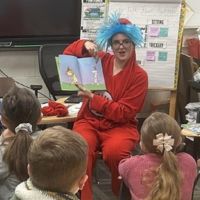
Each year in March, around 50 volunteers from the Kiwanis Club of Carrollton and the community visit local schools to throw a birthday party for Dr. Seuss, author of classic children’s books such as “The Cat in the Hat” and “Green Eggs and Ham.” The volunteers choose a Dr. Seuss book to read to or alongside the students, then talk with them about the importance of reading, both in school and at home with family members. With help from a Kiwanis Children’s Fund club grant, every student will then take home a copy of the book. This festive spin on story time gets kids excited about reading. 

Belgium Week for Children and Young People with Disabilities
Kiwanis Club of Innsbruck, Austria
Each year, local Kiwanis clubs take children from two special-needs schools in the Lienz district of Austria on a trip to Belgium. There is a lack of enrichment opportunities for children with disabilities in the area, and families and schools struggle to fund them on their own. A Kiwanis Children’s Fund grant helped fund this year’s trip for 18 students, who spent a week cycling, swimming, hiking, doing gymnastics and pottery, completing a high ropes course and participating in group games. The trip gives students an opportunity to develop their athletic and creative skills, but it also builds their confidence and communication skills — which help them cope with challenges, feel a sense of belonging and form friendships through shared activities.  

Art That Transforms
Kiwanis Club of Katías, Colombia
The Kiwanis Club of Katías has a history of visiting remote schools to deliver programs on nutrition, recreation, leadership and values. Now they are working with Andes Pinta, an organization that has developed art initiatives in urban areas, to bring art education to 10 rural schools without easy access to artistic and cultural programs. Art That Transforms, which has the support of the Department of Education and local teachers, will bring Kiwanis volunteers to teach a variety of painting and drawing techniques in three-month cycles and follow-up sessions over the course of two years. The club hopes that hundreds of students will develop new artistic skills — and with them, their self-expression and creativity. The program will culminate in an art exhibition in an urban center of the Andes, where communities, families and the students themselves will see their creations displayed. A Kiwanis Children’s Fund grant will help pay for art and educational supplies, transportation and costs associated with mounting the exhibition. 

Sensory Room Phase 2: Advanced Multisensory Integration
Kiwanis Club of Kuala Lumpur, Malaysia
The Kiwanis Club of Kuala Lumpur is stepping up to help expand services offered by the Kiwanis Down Syndrome Foundation National Centre. Over 40% of the children who receive educational and physical therapy services at the Centre also face sensory processing challenges. The Centre’s new sensory room was built to address these needs — but it still needed specialized therapeutic tools recommended by a team of caregivers and experts who work closely with the children at the Centre. A Kiwanis Children’s Fund club grant will help purchase items that help children with visual tracking, tactile defensiveness and emotional self-regulation. With a hammock swing, sensory liquid-gel number tiles, a padded sequin wall panel, crash pad, infinity mirror, infinity tunnel and projector, 100 students will be better prepared for future school integration. 

More club grant projects
Other projects that received club grants in August include:    

  • Library renovations from the Kiwanis Clubs of Domodossola, Italy, and North Manchester, Indiana, U.S. 
  • A socio-emotional education program from the Kiwanis Club of Bucaramanga, Colombia 
  • A story time and book giveaway from the Kiwanis Club of La Palma, California, U.S. 
  • A school supply drive from the Kiwanis Club of Scottsdale, Arizona, U.S. 
  • A community garden from the Kiwanis Club of Rogers City, Michigan, U.S. 
  • The “Feed. Fuel. Teach.” nutrition initiative from the Kiwanis Club of Topsail Island Area, North Carolina, U.S. 
  • A middle school track and field event from the Kiwanis Club de Amigos, Tucson, Arizona, U.S. 
  • Meal packing events from the Kiwanis clubs of the Azaela City, Palatka, Florida, U.S., and Presque Isle, Maine, U.S. 
  • A winter clothing giveaway for local students from the Kiwanis Club of Joplin, Missouri, U.S. 
  • A food delivery and health education program from the Kiwanis Club of Acacías-Meta, Colombia 
  • Personal care and hygiene kits for students from the Kiwanis Club of Dexter-Sunrise, Maine, U.S. 
  • New or revitalized parks and playgrounds from the Kiwanis Club of Lakeshore, Sault St. Marie, Ontario, Canada; and in the U.S. from the Kiwanis Clubs of Pawleys Island, South Carolina; Redmond, Oregon; Garden City, Michigan; and Henderson Center, Eureka, California.  

How you can help
The Kiwanis Children’s Fund makes grants that improve the lives of children around the world by identifying projects that create a continuum of impact in a child’s life — one that spans their entire childhood and sets them up for a bright future. With gifts to The Kiwanis Possibility Project, the Children’s Fund ensures that its grantmaking has the greatest possible impact, supporting projects that target the Kiwanis causes — health and nutrition, education and literacy, and youth leadership development — whether through a Kiwanis club’s local service project or a club’s partner. 

Learn how your club can apply for a grant to help kids in your community. If you are interested in extending your and your club’s impact beyond your community, support The Kiwanis Possibility Project.   

8 ways to help kids love reading

8 ways to help kids love reading

With local partners and a few ideas, your club can support literacy.

By Destiny Cherry 

Education and literacy represent one of Kiwanis International’s three causes. Looking for ways your club can support kids’ love for reading? Here are eight ideas to do it through service, fundraising and community partnership: 

  1. Read to children at a local library, children’s hospital or school. In addition to serving kids, it’s a way to build connections with organizations in your community. Host story time at your local library, read to kids in after-school programs and during designated class times, or read to young patients in a children’s hospital. If you have multilingual club members, diversify your reading languages for kids who are multilingual or learning a new language.  
  2. Tutor at schools in your area. When you partner with schools, your club gains access to students across age groups and academic levels. While high school tutors usually require subject-specific knowledge or more advanced educational experience, elementary and lower middle-grade levels are more flexible and do not typically require college degrees. Depending on the school and the instructor’s comfort levels, tutoring can take place in a variety of settings — whether it’s during class time, after school or even as summer-school service.  
  3. Hold a book drive. Your club can host the event at a community-centered location, offering snacks and drinks during your hours of operation — and even provide Kiwanis-branded items to keep your club in people’s minds. Promote the donation of books that reflect a range of races, ethnicities, religions and languages. Distribute the books to multiple locations — or partner with a single location for the event and donate the books there at the end of the drive.  
  4. Start and fill a Little Free Library. A Kiwanis International partner, Little Free Library expands access to books through free, accessible exchange. In your community, it’s a visible testament to the club’s commitment to education and literacy.  
  5. Conduct a reading challenge on social media. Whether it’s on your club’s social media accounts or on a town/community account, a challenge could take a variety of forms. One idea: The first family to read 50 books and submit the reviews of each book as evidence are the winners. Another idea: Provide a bingo card of reading-related tasks — such as reading in a park or checking out a library book — that a family would fill out and then submit with a photo of each activity. Add book-related prizes or bookstore gift cards as incentives. 
  6. Create reading kits for kids. Here’s a way to get all club membes involved in a service project. Reading kits require only a few supplies — colored paper, markers, pencils, glue sticks and scissors — with different members contributing different supplies. One idea: A member creates a background, leaving space for a child to fill in characters and continue the story. After creating the kits, take them to a children’s hospital or to a library for story time — and complete the stories alongside the kids. Include handmade  bookmarks to add some flair. 
  7. Fundraising for e-readers. With a built-in dictionary, translators, audiobook capabilities and easy access to books, e-readers have been an increasingly useful way to help children who struggle with reading. But they’re not always available in large quantities to libraries, schools, hospitals and childcare centers. Raising money for one (or all) of these organizations can allow kids who are falling behind to bridge the gap with their peers. Don’t forget our five fundraising fundamentals!  
  8. Sponsor a “literacy corner.” Approach local businesses about putting a club-sponsored “literacy corner” in their locations. It can be as simple as a bookshelf, basket or small table with children’s books and learning games in the corner of a coffee shop, diner, barber shop/salon, laundromat or local retail store. Your club can take responsibility for accumulating the items while the business oversees the maintenance and cleanliness of the corner. Hold a fundraiser for the corner or conduct a drive for books and games. The business could also encourage customers to bring in lightly used books or games.  

More tips and ideas
There’s no better source of inspiration than real success. Check out some past success stories from the Kiwanis family. And get more tips for promoting literacy. 

Le programme de lecture d'un club attire des entreprises adhérentes 

Le programme de lecture d'un club attire des entreprises adhérentes 

Découvrez comment uneclub Kiwanis en Louisiane, aux États-Unis, recrute des entreprises et des organisations de la région.

Par Julie Saetre 

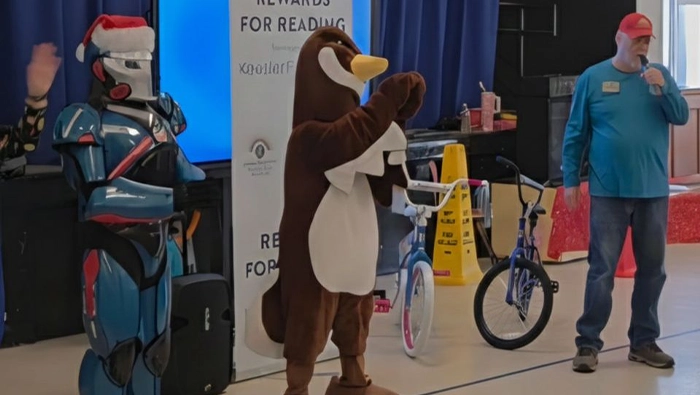
En 2007, Mel Dussel était membre de son « club Kiwanis » depuis à peine quelques mois lorsque le président de son club lui a demandé de passer dans une école primaire locale. L’ club Kiwanis , les Dawn Busters de Metairie, en Louisiane (États-Unis), avait récemment lancé un programme intitulé « Rewards for Reading », grâce auquel les enfants remportaient des prix et des récompenses pour améliorer leurs compétences en lecture. Ce jour-là, en décembre, le club offrait à l’un des participants au programme un vélo neuf — une initiative qu’il organisait deux fois par an. 

En tant que représentant du club à l’ manifestation, Dussel a été tellement ému qu’il a offert au club deuxième moto du club pour l’année en guise de récompense supplémentaire, en promettant de la remplacer lui-même pour le prochain tirage au sort prévu.

Il s'est rapidement retrouvé à la tête du programme « Rewards for Reading » et a souhaité en élargir la portée. Il s'est attaché à augmenter le nombre d'adhésions d'entreprises au club, ce qui permettrait également d'accroître les dons en nature et en espèces.

C’est là que les compétences de Dussel en matière de vente et de réseautage ont pris tout leur sens. Un ami d’un ami lui a suggéré de contacter un responsable d’un centre de laser tag local. Cette entreprise est devenue le premier membre corporatif que Dussel a recruté pour le club liste des membres. Pour le programme de lecture, cela s’est traduit par un don de billets de laser tag pour les enfants participants, ainsi que par des réductions sur l’achat de billets supplémentaires et sur la restauration sur place.

Liste des participants et résultats ci-dessous
À mesure que le programme « Rewards for Reading » gagnait en notoriété, des entreprises ont commencé à se manifester. Par exemple, une équipe locale de baseball de la ligue AAA a offert deux fois par an un bon d’entrée pour quatre personnes à chaque participant au programme, a organisé un match spécial dédié aux enfants, a assuré le transport en bus aller-retour vers l’ manifestation, et a invité les enfants à faire le tour des bases après le match.

Après que la Nouvelle-Orléans, située à proximité, eut accueilli le Super Bowl, la Greater New Orleans Sports Foundation — qui est également membre corporatif — a fait don d’une quantité suffisante de vestes, casquettes, t-shirts et autres articles promotionnels invendus pour remplir un semi-remorque à 18 roues. La fondation a poursuivi ses dons d’articles promotionnels à la suite d’autres événements sportifs majeurs organisés dans la ville.

Les adhésions d’entreprises ont eu un effet d’entraînement sur l’ensemble des programmes et initiatives du club. Par exemple, le club consacrait auparavant 10 000 dollars américains par an à l’aide alimentaire des membres de la communauté dans le besoin ; aujourd’hui, ce projet est entièrement financé. En effet, le club utilise désormais ces 10 000 dollars pour financer les « bourses », qu’il attribue aux lycéens en terminale de chacun de ses cinq Key Clubs parrainés. 

Le bilan d’une réussite
Au cours des 19 dernières années, le club a accueilli plus de 200 nouveaux membres, dont près de 50 adhésions d'entreprises. Les enfants participant au programme « Rewards for Reading » ont reçu plus de 20 millions de dollars américains de récompenses, et plus de 1 500 d'entre eux ont remporté un vélo neuf. 

La liste actuelle des membres du club, disponible à l'adresse membres liste des membres , ressemble à un véritable « Who's Who » : le lieutenant- gouverneur , de Louisiane ; le commissaire à l'agriculture ; le maire de Kenner, en Louisiane ; le directeur des écoles ; des membres du conseil municipal ; l'American Culinary Foundation de La Nouvelle-Orléans ; sept banques ; trois coopératives de crédit fédérales. 

« Ils font tous partie des Dawn Busters grâce au programme de lecture », explique M. Dussel, « mais pas seulement en tant que donateurs ».

« Tous ces représentants d’entreprises ne sont pas seulement des membres, des mécènes et des donateurs », ajoute-t-il. « Ils s’impliquent. » 

Comment votre club peut y parvenir
Selon M. Dussel, la recherche de membres entreprises et de sponsors n’est pas l’apanage des grands clubs. Ce sont les projets et les programmes d’un club qui comptent le plus.

« Les gens disent : “Ah, mais vous avez un grand club” », ajoute-t-il. « On n’a pas toujours été un grand club. Peu m’importe que vous ayez une ville de 50 habitants. »

« J’ai passé ma vie à vendre. Mais si vous n’avez pas de produit à vendre, vous ne vendrez rien. … Sans le programme de lecture, nous n’aurions pas les deux tiers [des adhésions d’entreprises]. » 

Pour les clubs qui souhaitent lancer leurs propres initiatives d’ membres e d’entreprise, Dussel propose quelques conseils utiles : 

  • Identifiez des prospects potentiels. Comment pouvez-vous, vous et une nouvelle organisation membre, en tirer mutuellement profit ? « Les associations [clubs Kiwanis ] [sont comme] une entreprise », explique M. Dussel. « Qui souhaitez-vous avoir à vos côtés dans votre entreprise ? Qui pouvez-vous aider ? »  
  • Soyez prêts. Dussel a toujours sur lui des cartes rouges portant la mention « Dawn Busters Metairie Rewards for Reading » et son adresse courriel , qu’il remet aux personnes intéressées. « S’il y a plus de deux personnes dans la pièce, je cherche [des prospects] », explique-t-il. Il leur demande de l’ courriel r afin qu’il puisse leur expliquer plus en détail les activités du club et le fonctionnement du programme de lecture.  
  • Demandez aux prospects d'intervenir lors des réunions. Dussel estime qu'un intervenant invité sur quatre devient membre du club ou membre d'entreprise. 
  • Obtenez les coordonnées du représentant désigné de l’entreprise adhérente. « Lorsque vous recrutez ces membres, vous ne vous contentez pas de les recruter, explique M. Dussel. Vous accédez à tout leur réseau. » 

Au-delà leurs besoins et centres d’intérêt spécifiques, ajoute-t-il, les membres entreprises sont comme les autres membres : ils ont besoin de profiter pleinement de l’expérience du club. M. Dussel suggère de prévoir dans le calendrier du club des moments dédiés aux célébrations et aux événements conviviaux. Récemment, le club a recruté trois nouveaux membres à l’issue d’une soirée de bowling dans une salle de jeux locale.