Alex Dawson suit les traces de son arrière-grand-père, qui a tracé cette voie il y a 95 ans.
Par Tony Knoderer
En 1920, Charlie Dawson était l'membre fondateur e de l'club Kiwanis , à Fargo, dans le Dakota du Nord, aux États-Unis. Il en est devenu le président en 1931 et en est resté membre jusqu'en 1970, année de son décès.
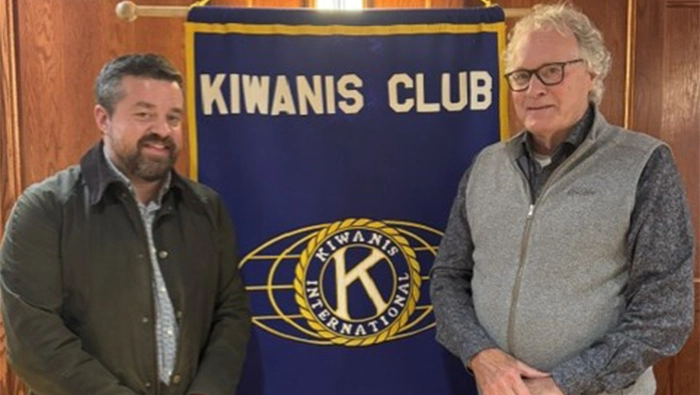
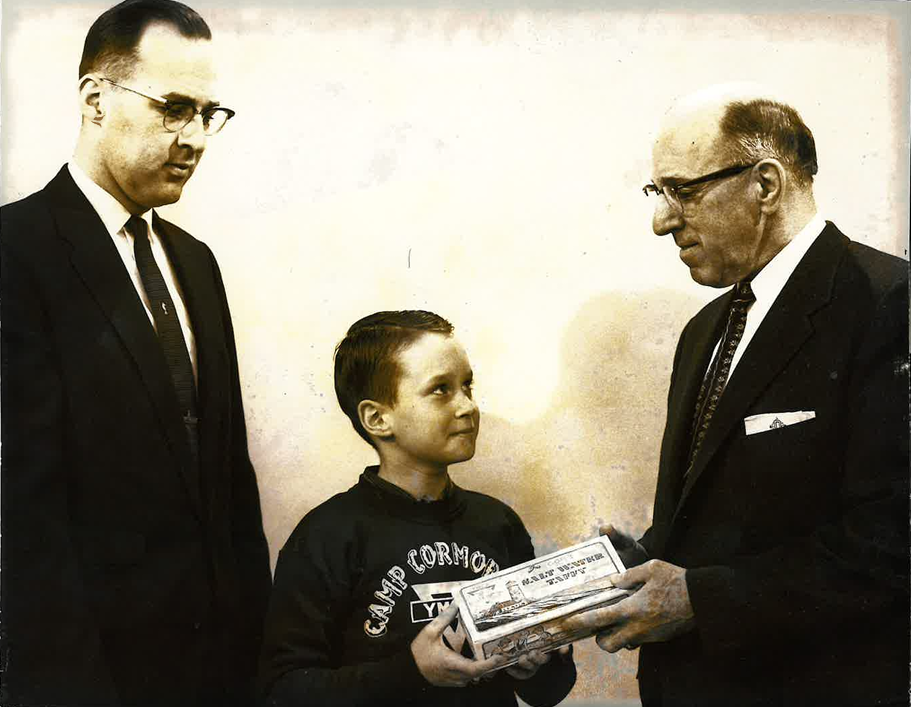
Si vous trouvez que c'est déjà un parcours impressionnant en termes de longévité et de leadership, considérez ceci : son arrière-petit-fils, Alex, est le président du club 106 ans plus tard. En effet, il représente la quatrième génération de la famille Dawson à occuper la présidence du club — après son arrière-grand-père, son grand-père et son père, Tom. (Voir ci-dessus une photo récente d’Alex et de Tom. Une photo d’enfance de Tom avec son père et son grand-père se trouve à la fin de cet article.)
Au vu de cette histoire, on pourrait penser que la présidence de la famille Dawson est une tradition bien établie au sein du club. Mais Alex et Tom affirment que le rôle de dirigeant assumé par chacun est le fruit naturel d’un engagement personnel, et non d’une stratégie ou d’une attente.
« La présidence n’était même pas une option que j’envisageais », explique Alex. « Mais à mesure que je me suis davantage impliqué dans le club, j’ai fini par me sentir plus à l’aise à l’idée d’accepter ce poste — même si je ne dirais pas que c’est quelque chose que j’ai jamais recherché. »
Un parcours commun vers le leadership
Lorsque Alex a rejoint le club de Fargo en 2013, Tom en était membre depuis 27 ans — et avait occupé le poste de président du club en 1999-2000.
Le parcours vers des fonctions de direction a été similaire pour Tom et Alex, et c'est un parcours courant pour les membres d'Kiwaniens s à tous les niveaux de l'organisation : à mesure que l'membres au sein du club se poursuit et que le lien avec Kiwanis se renforce, l'accès à un poste de direction semble moins intimidant.
« Je peux dire en toute honnêteté que lorsque Alex a intégré le [club comit] pr », explique Tom, « personne ne pensait qu’il devait forcément être là ni que c’était pour cette raison qu’il s’y trouvait. »
Alex n'avait certainement aucune idée préconçue. Lorsque ses collègues lui ont proposé d'assumer des responsabilités de direction, il ne savait pas à quoi s'attendre quant à l'impact qu'il aurait sur ces fonctions — ni quant à l'impact que celles-ci auraient sur lui.
« Je veux dire, prendre la parole en public n’était même pas quelque chose qui me plaisait particulièrement », ajoute-t-il. « Du coup, au fur et à mesure que je me familiarisais avec l’ pr, la présidence n’était même pas une option que j’envisageais. »
Pour les quatre générations de Dawson, le parcours à la tête du club a suivi une ligne constante. Charlie a ouvert la voie en adhérant au club, puis en en devenant le président plus d’une décennie plus tard. Son fils, Bob (le père de Tom et le grand-père d’Alex), a été élu président en 1973, après avoir rejoint le club en 1950.
« Il n’y a pas d’urgence à nommer des personnes à ces postes », explique Alex. « Le club a toujours fait preuve d’une certaine rigueur en matière de leadership, qu’il s’agisse du président du club ou de l’ pr e de notre « manifestation » de crêpes. »
Souvenirs en famille
Bien sûr, l’ membres multigénérationnelle a donné lieu à de nombreux souvenirs Kiwanis en famille. Par exemple, cet « manifestation » de crêpes — l’ club Kiwanis e du Fargo Annual Pancake Karnival — a marqué pour Tom et Alex une première approche de l’organisation dès leur plus jeune âge.
« Mes premiers souvenirs du club remontent au Pancake Karnival », raconte Tom. « J’y allais quand j’avais 15 ans… ça fait donc bientôt 60 ans. Je me souviens assez bien des lieux et de toute cette expérience autour des crêpes. »
Des années plus tard, Alex a vécu des expériences similaires lors de l'manifestation, qui se tenait alors au centre municipal local.
« Je me souviens que les files d’attente étaient vraiment longues, et qu’on sentait, enfin, de saucisse », dit-il en riant. « Et à un moment donné, pendant mon adolescence, j’ai commencé à donner un coup de main lors de ces (événements) — que ce soit pour verser un peu de pâte à crêpes ou simplement pour faire des petits boulots ici et là. »
« Les associations civiques ou d'action sociale, c'est quelque chose que j'ai découvert très tôt dans ma vie. »
Tradition familiale, stabilité du club
Alors qu’Alex entame son mandat de président, le club de Fargo compte environ 80 membres ( liste des membres ) et dispose d’un programme bien établi de projets et d’ collectes de fonds. (Le Pancake Karnival reste un projet phare, ayant même remporté le Prix d’argent du Groupe II lors du Concours international des projets phares du Kiwanis de 2026.)
Quatre générations d'membres s et de dirigeants au sein du club constituent une belle réussite familiale, mais les Dawson restent modestes quant à la place qu'elle occupe dans l'histoire. Selon Tom, ce qui importe, c'est ce que cela révèle aux gens sur l'avenir du club.
« Je pense qu’il est important et significatif pour les nouveaux membres de connaître l’histoire du club — simplement pour savoir que nous ne sommes pas apparus il y a dix ans, mais que nous existons depuis 126 ans », ajoute-t-il. « Ainsi, lorsqu’ils rejoignent le club, ils ne rejoignent pas simplement un club de service à la mode. »
D'autres témoignages de familles
Des familles au sein de la famille Kiwanis — ce n’est pas rare ! En effet, un précédent article de blog présente d’autres exemples de clubs comptant plusieurs membres issus d’une même famille.
Tom Dawson (au centre) avec son père, Bob, et son grand-père, Charlie (respectivement à gauche et à droite).