Grants help transform kids’ education

Grants help transform kids’ education

Four clubs on four continents will help kids learn and grow in new ways. 

Di Erin Chandler

In August, the Kiwanis Children’s Fund awarded 22 club grants to support outstanding Kiwanis club projects on four continents. The following four projects — one from each region — show how Kiwanians can transform kids’ education. By making reading a fun event, organizing a trip that expands horizons, introducing kids to art and creativity, and providing a space for specialized learning, these projects turn students into lifelong learners. 
Dr. Seuss Reading Day
The Kiwanis Club of Carrollton, Georgia, U.S.
Each year in March, around 50 volunteers from the Kiwanis Club of Carrollton and the community visit local schools to throw a birthday party for Dr. Seuss, author of classic children’s books such as “The Cat in the Hat” and “Green Eggs and Ham.” The volunteers choose a Dr. Seuss book to read to or alongside the students, then talk with them about the importance of reading, both in school and at home with family members. With help from a Kiwanis Children’s Fund club grant, every student will then take home a copy of the book. This festive spin on story time gets kids excited about reading. 
Belgium Week for Children and Young People with Disabilities
Kiwanis Club of Innsbruck, Austria
Each year, local Kiwanis clubs take children from two special-needs schools in the Lienz district of Austria on a trip to Belgium. There is a lack of enrichment opportunities for children with disabilities in the area, and families and schools struggle to fund them on their own. A Kiwanis Children’s Fund grant helped fund this year’s trip for 18 students, who spent a week cycling, swimming, hiking, doing gymnastics and pottery, completing a high ropes course and participating in group games. The trip gives students an opportunity to develop their athletic and creative skills, but it also builds their confidence and communication skills — which help them cope with challenges, feel a sense of belonging and form friendships through shared activities.  
Art That Transforms
Kiwanis Club of Katías, Colombia
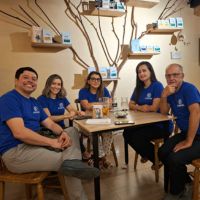
The Kiwanis Club of Katías has a history of visiting remote schools to deliver programs on nutrition, recreation, leadership and values. Now they are working with Andes Pinta, an organization that has developed art initiatives in urban areas, to bring art education to 10 rural schools without easy access to artistic and cultural programs. Art That Transforms, which has the support of the Department of Education and local teachers, will bring Kiwanis volunteers to teach a variety of painting and drawing techniques in three-month cycles and follow-up sessions over the course of two years. The club hopes that hundreds of students will develop new artistic skills — and with them, their self-expression and creativity. The program will culminate in an art exhibition in an urban center of the Andes, where communities, families and the students themselves will see their creations displayed. A Kiwanis Children’s Fund grant will help pay for art and educational supplies, transportation and costs associated with mounting the exhibition. 
Sensory Room Phase 2: Advanced Multisensory Integration
Kiwanis Club of Kuala Lumpur, Malaysia
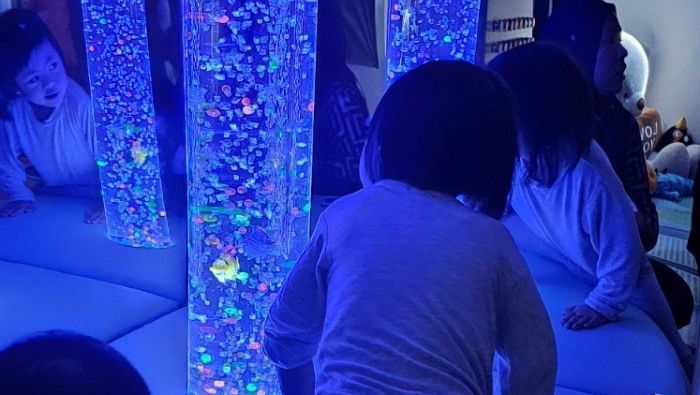
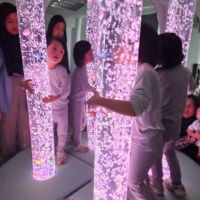
The Kiwanis Club of Kuala Lumpur is stepping up to help expand services offered by the Kiwanis Down Syndrome Foundation National Centre. Over 40% of the children who receive educational and physical therapy services at the Centre also face sensory processing challenges. The Centre’s new sensory room was built to address these needs — but it still needed specialized therapeutic tools recommended by a team of caregivers and experts who work closely with the children at the Centre. A Kiwanis Children’s Fund club grant will help purchase items that help children with visual tracking, tactile defensiveness and emotional self-regulation. With a hammock swing, sensory liquid-gel number tiles, a padded sequin wall panel, crash pad, infinity mirror, infinity tunnel and projector, 100 students will be better prepared for future school integration. 

More club grant projects
Other projects that received club grants in August include:    

  • Library renovations from the Kiwanis Clubs of Domodossola, Italy, and North Manchester, Indiana, U.S. 
  • A socio-emotional education program from the Kiwanis Club of Bucaramanga, Colombia 
  • A story time and book giveaway from the Kiwanis Club of La Palma, California, U.S. 
  • A school supply drive from the Kiwanis Club of Scottsdale, Arizona, U.S. 
  • A community garden from the Kiwanis Club of Rogers City, Michigan, U.S. 
  • The “Feed. Fuel. Teach.” nutrition initiative from the Kiwanis Club of Topsail Island Area, North Carolina, U.S. 
  • A middle school track and field event from the Kiwanis Club de Amigos, Tucson, Arizona, U.S. 
  • Meal packing events from the Kiwanis clubs of the Azaela City, Palatka, Florida, U.S., and Presque Isle, Maine, U.S. 
  • A winter clothing giveaway for local students from the Kiwanis Club of Joplin, Missouri, U.S. 
  • A food delivery and health education program from the Kiwanis Club of Acacías-Meta, Colombia 
  • Personal care and hygiene kits for students from the Kiwanis Club of Dexter-Sunrise, Maine, U.S. 
  • New or revitalized parks and playgrounds from the Kiwanis Club of Lakeshore, Sault St. Marie, Ontario, Canada; and in the U.S. from the Kiwanis Clubs of Pawleys Island, South Carolina; Redmond, Oregon; Garden City, Michigan; and Henderson Center, Eureka, California.  

How you can help
The Kiwanis Children’s Fund makes grants that improve the lives of children around the world by identifying projects that create a continuum of impact in a child’s life — one that spans their entire childhood and sets them up for a bright future. With gifts to The Kiwanis Possibility Project, the Children’s Fund ensures that its grantmaking has the greatest possible impact, supporting projects that target the Kiwanis causes — health and nutrition, education and literacy, and youth leadership development — whether through a Kiwanis club’s local service project or a club’s partner. 

Learn how your club can apply for a grant to help kids in your community. If you are interested in extending your and your club’s impact beyond your community, support The Kiwanis Possibility Project.   

8 ways to help kids love reading

8 ways to help kids love reading

With local partners and a few ideas, your club can support literacy.

By Destiny Cherry 

Education and literacy represent one of Kiwanis International’s three causes. Looking for ways your club can support kids’ love for reading? Here are eight ideas to do it through service, fundraising and community partnership: 

  1. Read to children at a local library, children’s hospital or school. In addition to serving kids, it’s a way to build connections with organizations in your community. Host story time at your local library, read to kids in after-school programs and during designated class times, or read to young patients in a children’s hospital. If you have multilingual club members, diversify your reading languages for kids who are multilingual or learning a new language.  
  2. Tutor at schools in your area. When you partner with schools, your club gains access to students across age groups and academic levels. While high school tutors usually require subject-specific knowledge or more advanced educational experience, elementary and lower middle-grade levels are more flexible and do not typically require college degrees. Depending on the school and the instructor’s comfort levels, tutoring can take place in a variety of settings — whether it’s during class time, after school or even as summer-school service.  
  3. Hold a book drive. Your club can host the event at a community-centered location, offering snacks and drinks during your hours of operation — and even provide Kiwanis-branded items to keep your club in people’s minds. Promote the donation of books that reflect a range of races, ethnicities, religions and languages. Distribute the books to multiple locations — or partner with a single location for the event and donate the books there at the end of the drive.  
  4. Start and fill a Little Free Library. A Kiwanis International partner, Little Free Library expands access to books through free, accessible exchange. In your community, it’s a visible testament to the club’s commitment to education and literacy.  
  5. Conduct a reading challenge on social media. Whether it’s on your club’s social media accounts or on a town/community account, a challenge could take a variety of forms. One idea: The first family to read 50 books and submit the reviews of each book as evidence are the winners. Another idea: Provide a bingo card of reading-related tasks — such as reading in a park or checking out a library book — that a family would fill out and then submit with a photo of each activity. Add book-related prizes or bookstore gift cards as incentives. 
  6. Create reading kits for kids. Here’s a way to get all club membes involved in a service project. Reading kits require only a few supplies — colored paper, markers, pencils, glue sticks and scissors — with different members contributing different supplies. One idea: A member creates a background, leaving space for a child to fill in characters and continue the story. After creating the kits, take them to a children’s hospital or to a library for story time — and complete the stories alongside the kids. Include handmade  bookmarks to add some flair. 
  7. Fundraising for e-readers. With a built-in dictionary, translators, audiobook capabilities and easy access to books, e-readers have been an increasingly useful way to help children who struggle with reading. But they’re not always available in large quantities to libraries, schools, hospitals and childcare centers. Raising money for one (or all) of these organizations can allow kids who are falling behind to bridge the gap with their peers. Don’t forget our five fundraising fundamentals!  
  8. Sponsor a “literacy corner.” Approach local businesses about putting a club-sponsored “literacy corner” in their locations. It can be as simple as a bookshelf, basket or small table with children’s books and learning games in the corner of a coffee shop, diner, barber shop/salon, laundromat or local retail store. Your club can take responsibility for accumulating the items while the business oversees the maintenance and cleanliness of the corner. Hold a fundraiser for the corner or conduct a drive for books and games. The business could also encourage customers to bring in lightly used books or games.  

More tips and ideas
There’s no better source of inspiration than real success. Check out some past success stories from the Kiwanis family. And get more tips for promoting literacy. 

Un nuovo modo per sviluppare la leadership giovanile

Un nuovo modo per sviluppare la leadership giovanile

Uno Kiwanis ha ha trasformato il proprio annuale dei soci insediamento iin un civico evento.

Di Maleah Stephens, responsabile del club segretario, club Kiwanis , di Litchfield, Arizona, Stati Uniti.

Quando si pensa al Kiwanis progetti di servizio, spesso vengono in mente le iniziative di pulizia dei parchi e le raccolte di libri. Ma per il nostro club Kiwanis nella West Valley dell’Arizona, l’evento annuale “ funzionario ”insediamento non è più solo una “questione di lavoro” discussa durante una riunione del club.

Invece di organizzare una cena privata a porte chiuse attorno a un “ data della consegna della charter ”, abbiamo creato un “ evento ” aperto a tutti e pieno di energia su un palcoscenico comunitario. Si tratta, infatti, di un catalizzatore regionale per la leadership dei giovani adulti e l’unità civica intersettoriale.

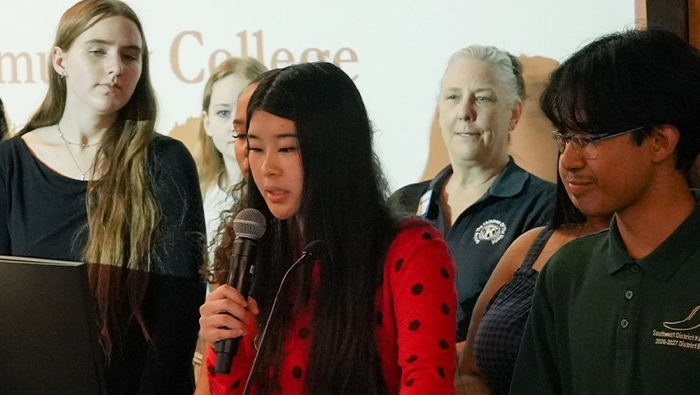
Nel settembre 2026, la cena comunitaria “United in Service” insediamento ha riunito oltre 200 leader della comunità, studenti e funzionari locali per osservare da vicino la famiglia Kiwanis all’opera. Tenutasi presso l’Estrella Mountain Community College (EMCC) di Avondale, in Arizona, la serata ha rotto gli schemi tradizionali delle attività del club per dare vita a un nuovo e audace modello di sviluppo giovanile.

Il potere della collaborazione
“United in Service” ha dimostrato tutta la forza della famiglia Kiwanis e della sua collaborazione con la comunità. I partecipanti hanno potuto vedere e scoprire: 

  • Kiwanis Programmi di Service e di Leadership (SLP): funzionari provenienti da 15 club " SLP " sponsorizzati, tra cui K-Kids, Builders Club, Key Club e Aktion Club, hanno partecipato a presentazioni sulle attività che hanno pianificato nelle loro comunità, nonché alle cerimonie congiunte di insediamento dell’ funzionario . 
  • Sostegno istituzionale: La presenza di alto livello di rappresentanti delle scuole locali distretto i, sindaci e membri dei consigli comunali ha consolidato il ruolo del Kiwanis come partner di riferimento nella regione per lo sviluppo giovanile. 
  • Unità interorganizzativa: I leader delle organizzazioni vicine dell’ no profit e hanno aderito all’iniziativa “ evento ”, celebrando gli obiettivi comuni della comunità. 
  • Integrazione nell’istruzione superiore: Grazie alla collaborazione con l’EMCC, l’ evento e ha indicato percorsi diretti che consentono ai membri delle associazioni studentesche, del consiglio studentesco e delle società onorarie di passare a ruoli di leadership attivi all’interno del Kiwanis. 

Cosa contraddistingue il progetto
Anziché mettere al centro le installazioni dei tavoli per adulti, il programma ha ribaltato il programma tradizionale. Questo ci ha permesso di mettere in evidenza: 

  • Il cambiamento incentrato sui giovani: I rappresentanti degli studenti sono stati i primi a salire sul palco, consentendo ai giovani di beneficiare al massimo dell’entusiasmo del pubblico e di ottenere la massima visibilità davanti ai leader cittadini e ai partner del settore dell’istruzione. 
  • Innovare il coinvolgimento dei giovani adulti: L’ evento , ha rappresentato il trampolino di lancio ufficiale a sostegno del Kiwanis Voices Club della West Valley di Phoenix, in Arizona. Si è trattato del secondo club Kiwanis Voices fondato negli Stati Uniti. Progettato specificamente per i giovani adulti di età compresa tra i 18 e i 26 anni, il programma Kiwanis Voices contribuisce a colmare il divario tra le esperienze di leadership acquisite alle scuole superiori e all’università e l’impegno civico permanente. 
  • Interazioni civiche interattive: Gli ospiti hanno dato il via alla serata con un’attività interattiva di “Civic Bingo” per rompere il ghiaccio, che ha messo in coppia gli studenti funzionari con sindaci, sovrintendenti e dirigenti dell’ no profit , al fine di instaurare autentici rapporti di mentore-allievo durante la cena. 

I nostri risultati 
Gli esiti immediati e a lungo termine dell’ evento e includono: 

  • Leader impegnati: Oltre 200 partecipanti hanno preso parte all’ evento , tra cui 120 leader studenteschi e un consulenti i in rappresentanza di 15 scuole. 
  • Sostenibilità: Realizzato secondo un modello di co-sponsorizzazione con l’EMCC e partner commerciali locali, l’ evento e è stato completamente autosufficiente, senza richiedere alcun stanziamento aggiuntivo dai fondi standard del club. 
  • Un percorso di formazione per i giovani adulti: Abbiamo istituito un programma di sostegno diretto per i giovani adulti di età compresa tra i 18 e i 26 anni nella West Valley, assicurandoci così la prossima generazione di leader Kiwanis. 

Qual è la storia del tuo club?
Il tuo club ha organizzato una cerimonia innovativa per l’ insediamento , oppure ha trasformato le normali attività del club in un’ evento a di servizio e reclutamento? Raccontacelo all’indirizzo [email protected].