Trainers build meaningful connections

Trainers build meaningful connections

This workbook/slide deck combination transforms leadership education into an engaging, interactive experience.

By Britney Warner 

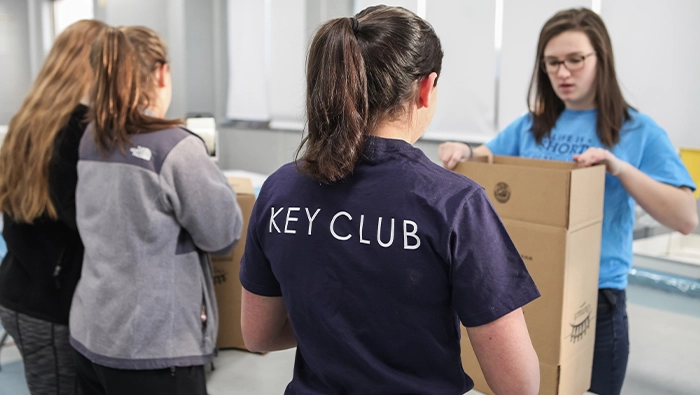
The impact of any educational presentation — from a formal training session to a brief workshop —relies on how effectively information is conveyed. The “Building Meaningful Connections” workbook, paired with its instructional slide deck, is designed to transform leadership education into an engaging, interactive experience. Created for district Leadership Development Coordinators and Certified Instructors, this resource offers practical tools and structured activities that foster collaboration, creativity and deeper learning during training sessions.  

The workbook serves as an all-in-one guide, featuring: 

  • Icebreakers and connection activities: Kick off sessions with exercises like “Sweet Introductions” and “Anchor Your Purpose” to build rapport and set clear goals. 
  • Teamwork challenges: Activities such as “The Spaghetti Marshmallow Challenge” and “Build a Model Club” strengthen problem-solving and communication skills. 
  • Deep discussions: Guided prompts like “Wow, Now, How” and “Ripple Effect” encourage strategic thinking and reflection on leadership impact. 
  • Service projects: Hands-on activities, including “Welcome Cards for New Students” and “Trauma Dolls,” connect leadership principles to real-world service. 
  • Wrap-up tools: Reflection exercises like “Letter to Future Self” and “Leadership Commitment Wall” help participants synthesize learning and commit to action. 

The accompanying slide deck provides visual support for instructions, discussion prompts and timing tips, ensuring smooth facilitation and consistent delivery across sessions. 

Key benefits for facilitators: 

  • Promotes active learning: Interactive exercises encourage participation and real-world application. 
  • Supports instructor confidence: Clear steps, adaptable resources and visual aids make facilitation seamless. 
  • Builds leadership culture: Activities emphasize collaboration, creativity and service.

Click here to view and download the slide deck.

Kiwanis mourns 2004-05 President Case Van Kleef 

Kiwanis mourns 2004-05 President Case Van Kleef 

Van Kleef remembered for being a courageous and collaborative leader and faithful member of Kiwanis.

By Julie Saetre

Case Van Kleef, the 2004-05 Kiwanis International president, passed away November 30. He was a member of the Kiwanis Club of Northside Naples in Florida, U.S. Past club memberships included Wheeling Township (Chicago, Illinois, U.S.); Stevens Point (Wisconsin, U.S.); Plover, a club he built (Wisconsin, U.S.); Bonita Springs (Florida, U.S.); and Rose Float of Pasadena (California, U.S.). 

Van Kleef joined Kiwanis in 1965 and held various leadership positions, including club president, lieutenant governor and international vice president/treasurer. He received many Kiwanis honors, including a George F. Hixson Fellow, Diamond-level 11; Charter Walter Zeller Fellow, Diamond-level 3; Heritage Society member; Tablet of Honor; Kiwanis Leadership Society; Carthage-Pullman Society; and G. Harold Martin Society. 

Kiwanis International 2005-06 President Steve Siemens recalled how he, Van Kleef and 2006-07 President Nelson Tucker collaborated and worked together for the betterment of Kiwanis. 

“When Case became president-elect, since I would follow him [as president], we met and created a continuous plan to have a seamless transition between the Kiwanis years we served. It was our goal to focus on the members, have the same distinguished program and work closely together. We talked weekly. We planned often. We worked together, not caring who was credited,” said Siemens. “After Nelson Tucker was successful in his election, we became three leaders with the same mind and mission. Case’s creativity, humor, caring heart and humility motivated both Nelson and me, and the members his life touched.”  

“Kiwanis International President Case VanKleef was an example of courageous leadership,” said 2009-10 Kiwanis International President and Kiwanis Executive Director Paul Palazzolo. “He never hesitated when he needed to make difficult decisions that were necessary for the organization’s success. Most importantly, he believed in his commitment to be an active Kiwanis club member.” 

During Van Kleef’s presidency, he worked to fulfill the goals of 2004-05 IDEA: Increase Kiwanis’ commitment to young children, develop leadership throughout the Kiwanis family, expand Kiwanis service around the world, and access Kiwanis service and growth. 

Under these goals, Kiwanians focused on initiatives such as fulfilling involvement in Young Children: Priority One, continuing the promise to UNICEF to eliminate iodine deficiency around the world, enhancing adult and youth leadership, and growing and building Kiwanis and Service Leadership Programs clubs. 

Van Kleef was a two-term president of the Wisconsin-Upper Michigan Kiwanis District Foundation, which created the Case Van Kleef Fellowship in his honor. A Van Kleef Fellowship permanently honors an individual who has dedicated outstanding time or service to Kiwanis. 

“He never stopped looking for a better, more creative way to strengthen his local club,” said Siemens. “He made things fun and he never lost who he really was — a servant of the member and a cheerleader for the organization.      

“Case became a very close friend, and his legacy will live for a long time. He blessed my life and so many more.” 

Born in the village of Poeldijk, the Netherlands, Van Kleef graduated from the Higher Hotel and Restaurant Management School in The Hague. He worked at hotels in Europe and for the Holland America Line. His U.S. career included the role of vice president of the Aristocrat Inns of America, during which he was approached by Sentry Insurance Company to open a five-star restaurant at company headquarters in Wisconsin. Later, he and his wife, Susan, opened and ran their own restaurant, The Cottage, in Plover, until they retired in 2001.  

Kiwanis was a family experience for the Van Kleefs. Susan has been a member of the Northside Naples Club (Florida, U.S.) since 2016. Their daughters, Stacy and Stefani, were involved at a young age. Both were members of Builders Club and Key Club, and Stacy was also a member of CKI.  

Throughout his life, Van Kleef’s commitment to servant leadership never wavered. Just one week before his death, he was delivering Thanksgiving meals to families in need. 

Grants create opportunities for all

Grants create opportunities for all

From July through September, smaller clubs made a big impact through the Kiwanis Children’s Fund. 

By Erin Chandler

In July, August and September, Kiwanis clubs around the world received Kiwanis Children’s Fund microgrants for projects that found creative ways to give more kids and families access to services, opportunities and enrichment. The following four projects highlight some of the ways Kiwanis clubs are using microgrants to give young people of all ages a promising start in the Kiwanis cause areas of education and literacy, health and nutrition, and youth leadership development. 

Education and Literacy 

Orange City Public Library E-Bike Project
Kiwanis Club of Floyd Valley, Iowa, U.S.
In its first year since chartering, the Kiwanis Club of Floyd Valley is already forming strong community partnerships to expand literacy. When the club heard that the local library was raising funds for a new e-bike program that will increase access to books and library programming in underserved areas, they decided to pitch in and purchase a safety and accessory package. A Kiwanis Children’s Fund grant will go toward a helmet, umbrellas, a first aid kit, lights, a horn or bell, a tire pump and repair kit, a phone mount, a basket, safety vests and more supplies to make the library’s e-bike safer. With the bike, library staff will be able to host remote story hours and even remotely check out materials to library patrons. 

Pencil Case Project
Kiwanis Club of Brisbane, Queensland, Australia
The Kiwanis Club of Brisbane discovered a simple way to reduce barriers to learning and participation in school. Every January for the past four years, club members have purchased pencils, colored pencils, erasers, rulers and highlighters. They then pack these supplies into durable, zip-up cases for teachers to distribute to kids who arrive without them for their first day at area schools. The project can set the tone for the year, enabling kids whose families might not be able to provide school supplies to feel included and prepared from the start. A Kiwanis Children’s Fund microgrant will help stock up to 150 cases for the upcoming school year. 


Health and Nutrition 

Pediatric Medical Equipment
Kiwanis Club of Tallahassee, Florida, U.S.
The Kiwanis Club of Tallahassee has a longstanding relationship with Bond Community Health Center, assisting in community outreach and providing chaperones for special events. Now members are teaming up with the Kiwanis Clubs of Southside Tallahassee, Tallahassee Northside, and Tallahassee-Killearn to provide new screening equipment for the clinic’s pediatric patients, many of whom attend Title I schools or are on Medicaid. A Kiwanis Children’s Fund microgrant will help purchase equipment for hearing screenings, benefiting thousands of children.  


Youth Leadership Development 

Building a Disc Golf Program for Students in Chugwater
Kiwanis Club of Wheatland, Wyoming, U.S.
In the small, rural community of Chugwater, there are limited opportunities for kids and families to engage in outdoor activities. The Kiwanis Club of Wheatland is stepping in to fix that by purchasing a portable disc golf kit for the town’s only elementary school — with help from a Kiwanis Children’s Fund microgrant and the Prairie View Charter School K-Kids. The 12 K-Kids club members have committed to raising US$500 for the equipment, giving them the chance to develop as leaders in the community and be personally and financially invested in the disc golf course. The club is excited to help, and working with them is the Kiwanians’ favorite part of the project. Once Kiwanis members have installed the equipment, they plan to provide initial instruction to students and teachers on how to use it. 

How you can help
To learn more about Kiwanis Children’s Fund microgrants, visitkiwanis.org/microgrant-program.    

If you want to help the Children’s Fund provide grants like these that reach children around the world, you canmake a giftto The Kiwanis Possibility Project. Your club alsocanapply for a grantto help kids in your community today.